


When I was a kid, writing and drawing were joined in my imagination as a single magical scribe-like activity.
I got one half of the two-part equation from each of my parents. My father was an editor and writer and my mother was a commercial artist.
In the beginning, drawing was dominant because it came naturally while writing had to be learned. But writing represented the ultimate power, embodied in a pile of typed or printed pages like one of the manuscripts in my father’s office or one of the dense books without pictures in it on his bookshelf.
Illustrated children’s books (the kind on my bookshelf) especially Howard Pyle’s King Arthur — his fine-line drawings of knights, armor, chainmail, banners, swords, stone walls, the grass where the men were fighting — made an early and lasting impression on me, forming my lifelong taste for pen-and-ink drawings combined with text.
I imitated Pyle’s drawings in style and subject matter and put my initials at the bottom of the page in imitation of his signature. I practiced penmanship, calligraphy. Drawing was my route into writing. Handwriting is a bridge between the two activities. To this day, I use the same pen to write and draw, a Pilot fineliner, the same model my father stockpiled at home for marking up manuscripts.
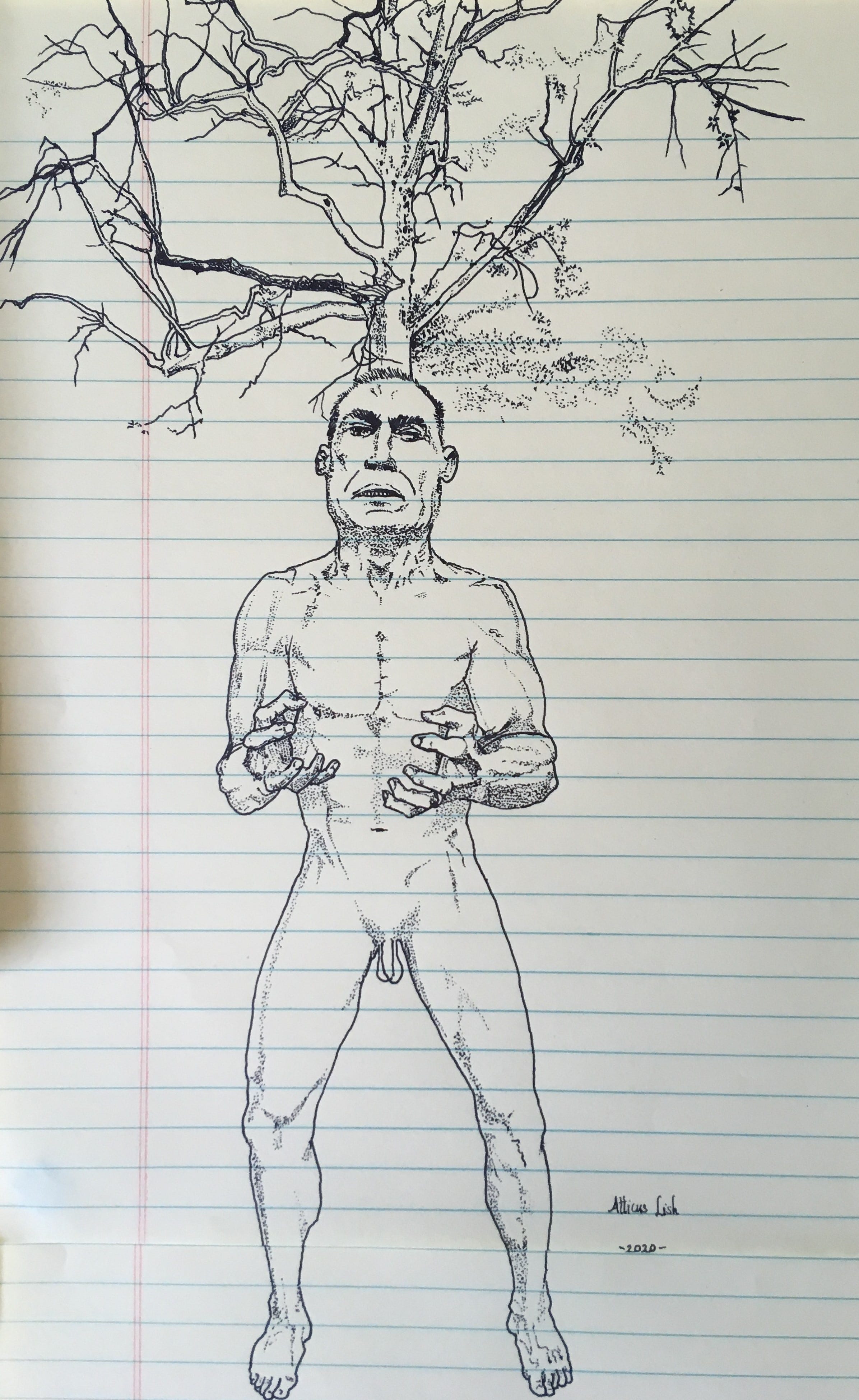
When I was five, I tried to write a novel. I managed a page of nonsense that began “Dear Reader” and ended “The End.” My sitter saw it and laughed. Later, wanting to write but not knowing what to say, I simulated text by drawing pages of squiggly lines and made-up symbols.
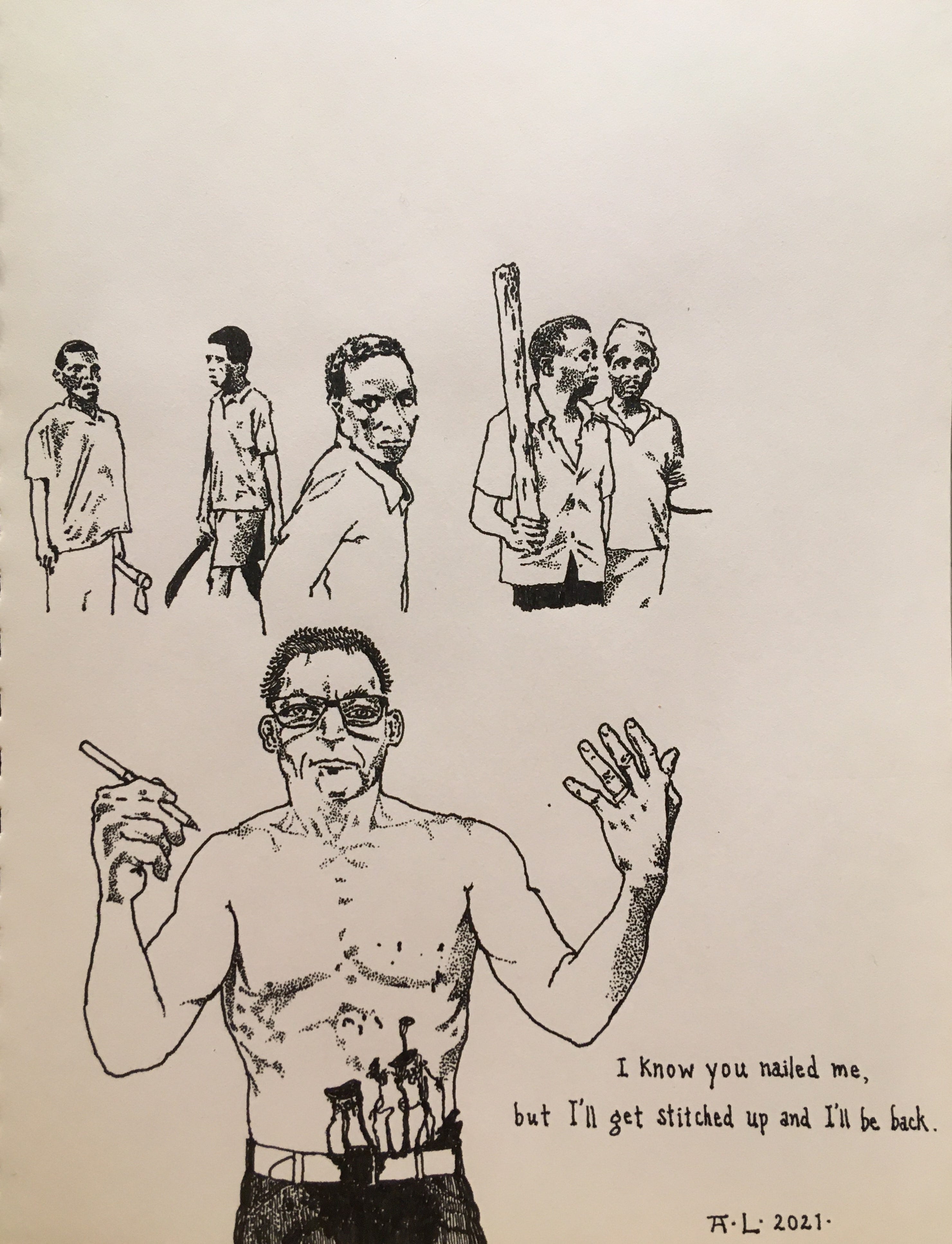
Another line-drawing illustrator, Edward Gorey, that depicter of hapless Victorians suffering curious mishaps, introduced me to captions. His were darkly humorous. I eventually made a book of captioned drawings notable for their perversity. I would draw a drawing first — it was the problem — then think of a caption, the solution.
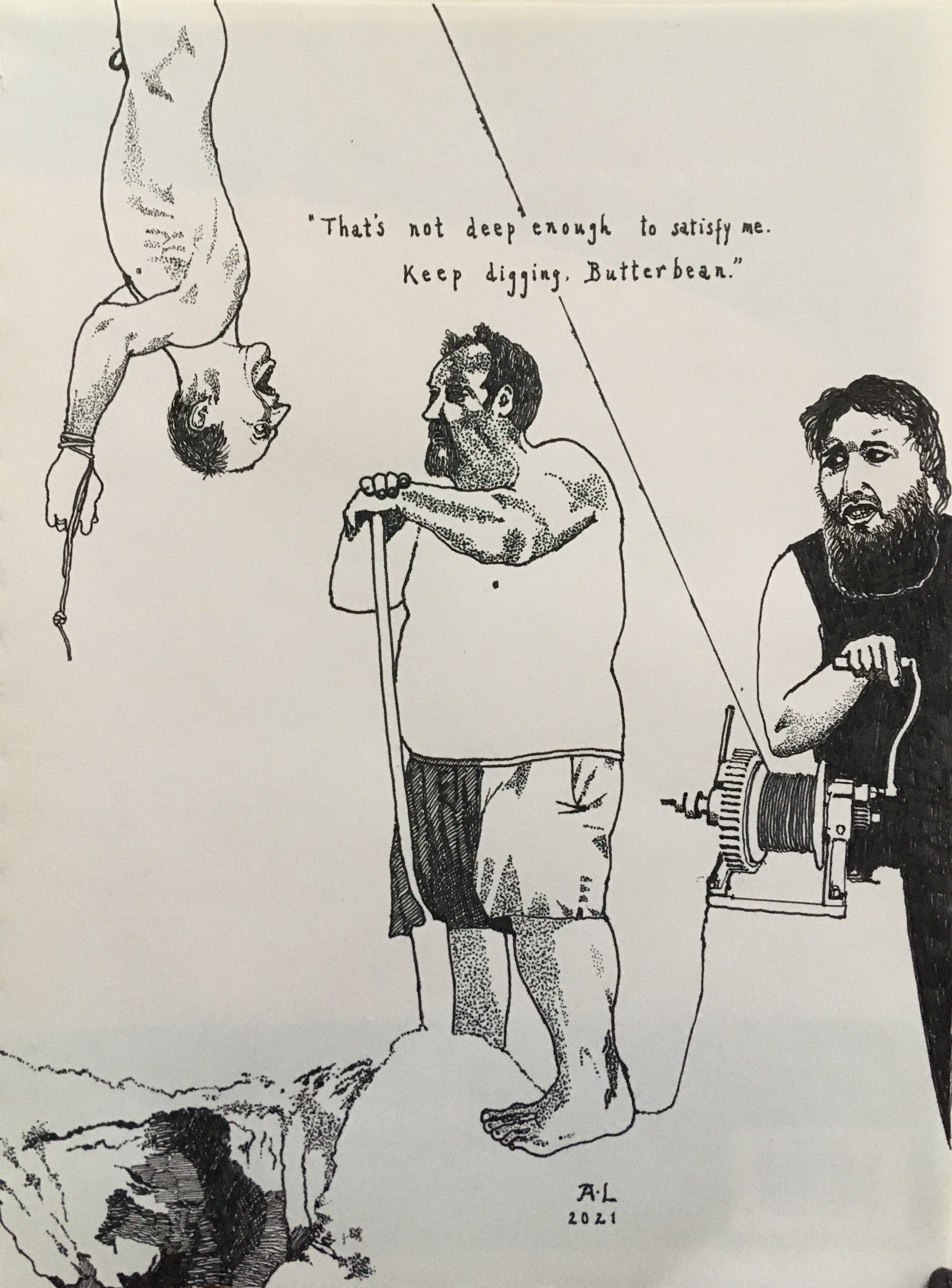
It took me decades, until my early forties, to produce a first novel. I wrote it by hand. Of course the book wasn’t illustrated, but I made a conscious effort to write with images.
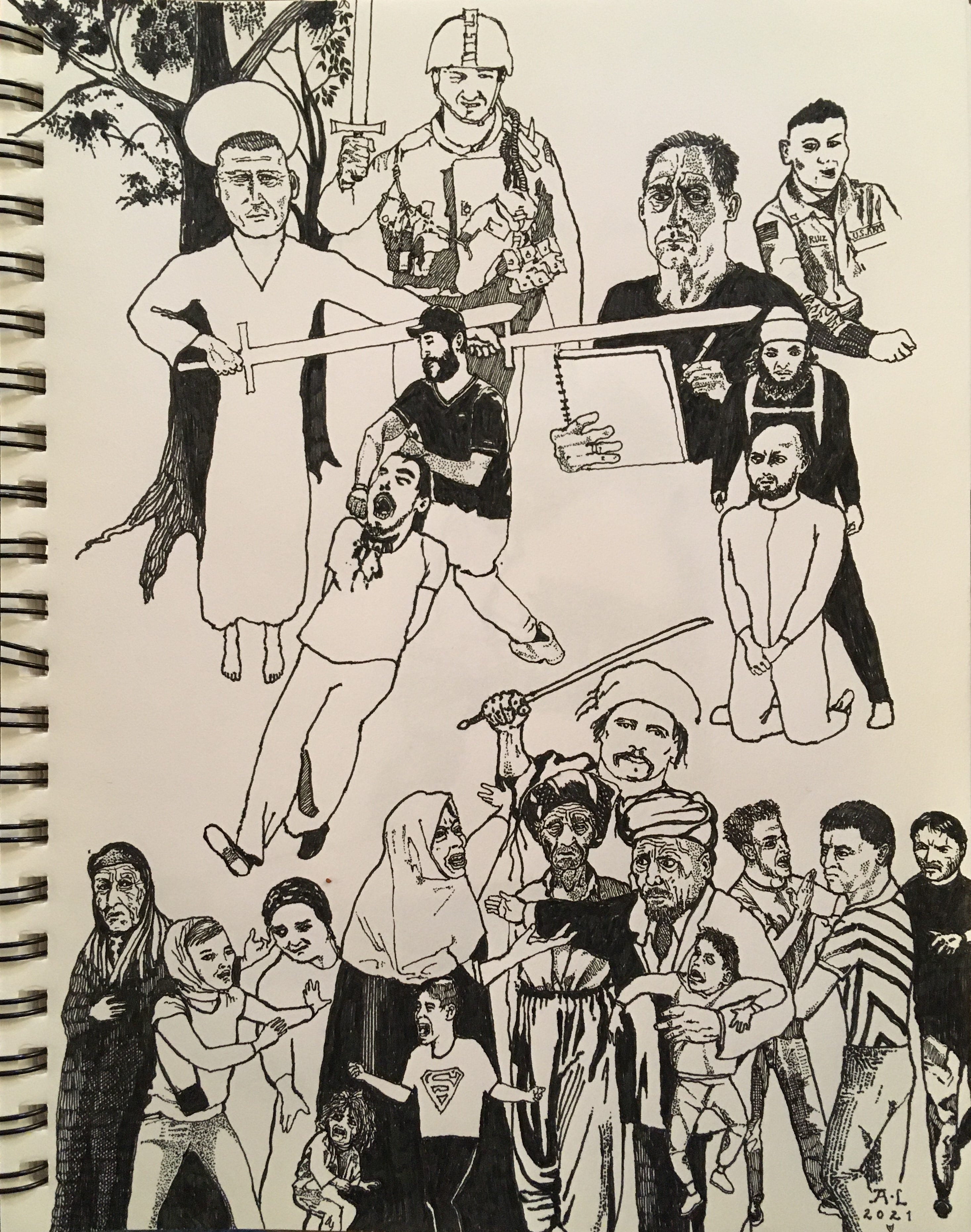
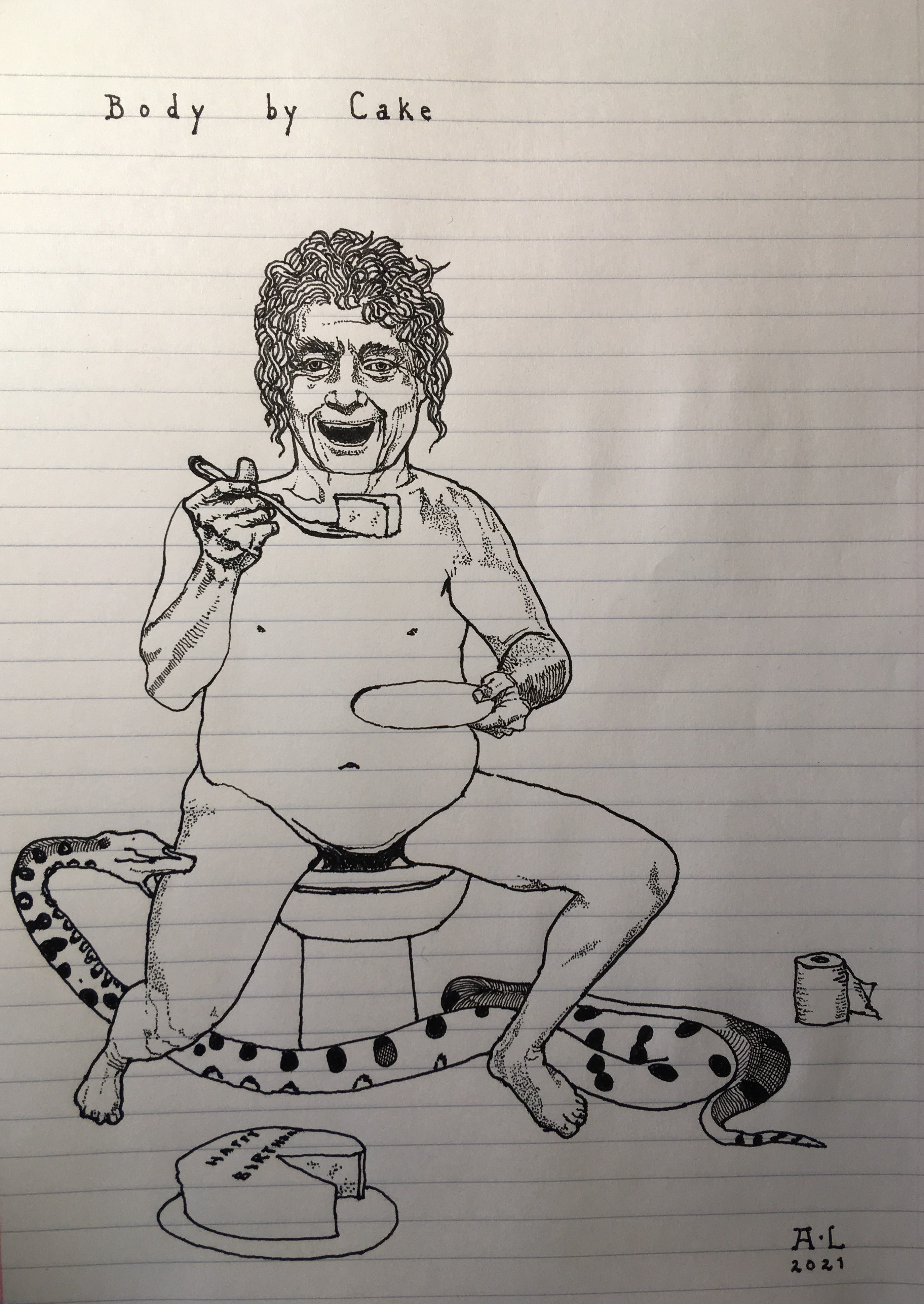
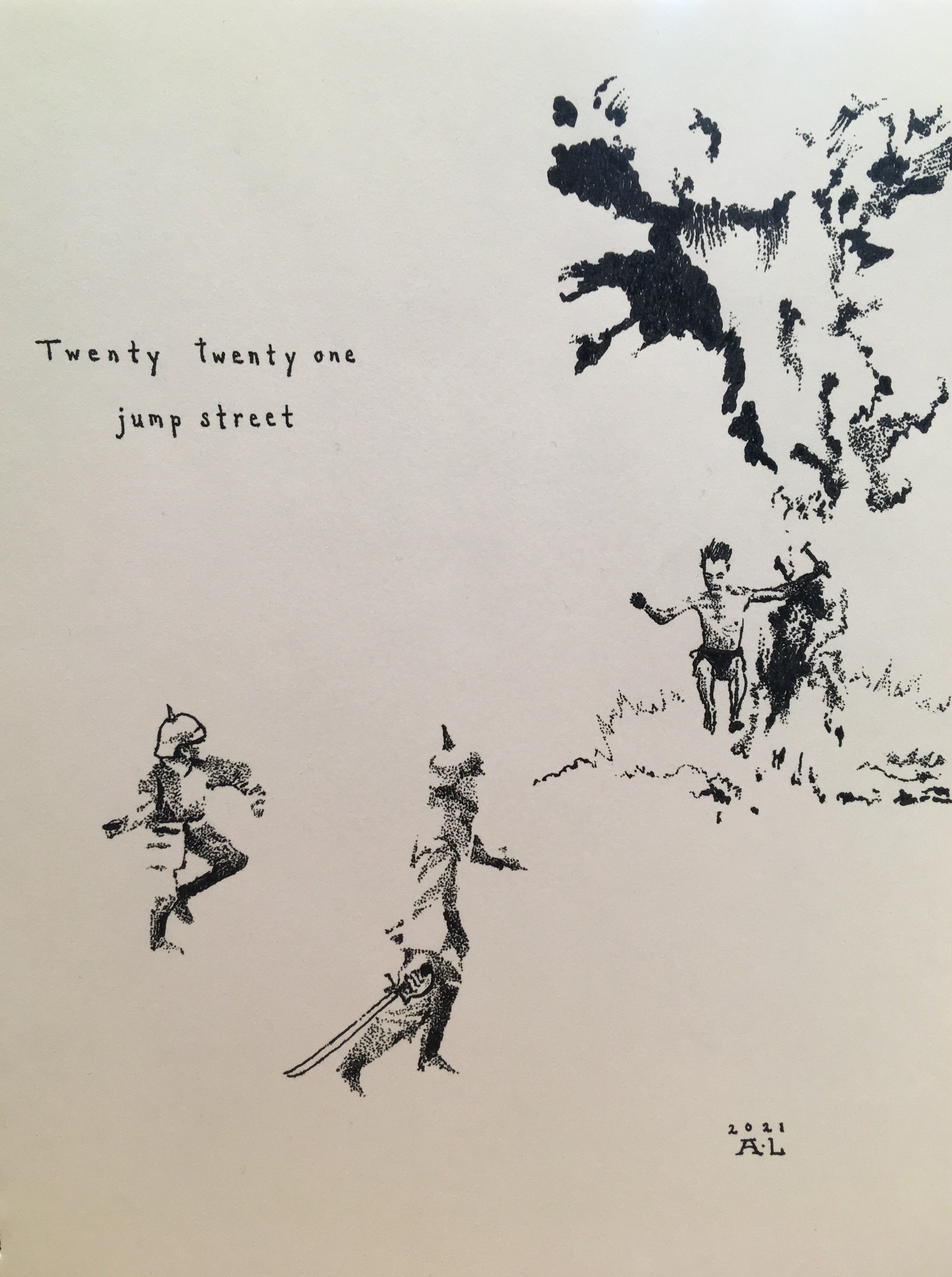
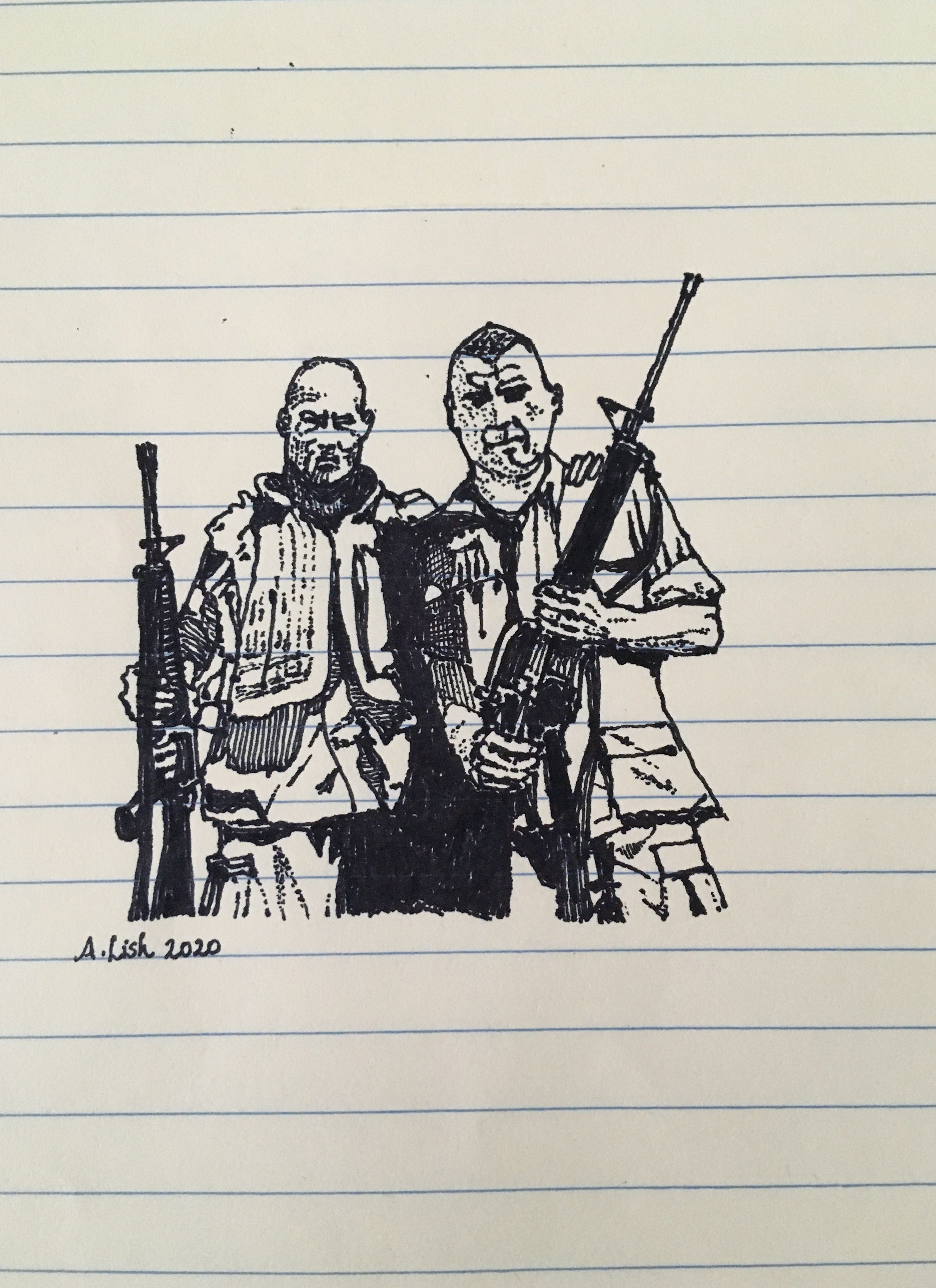
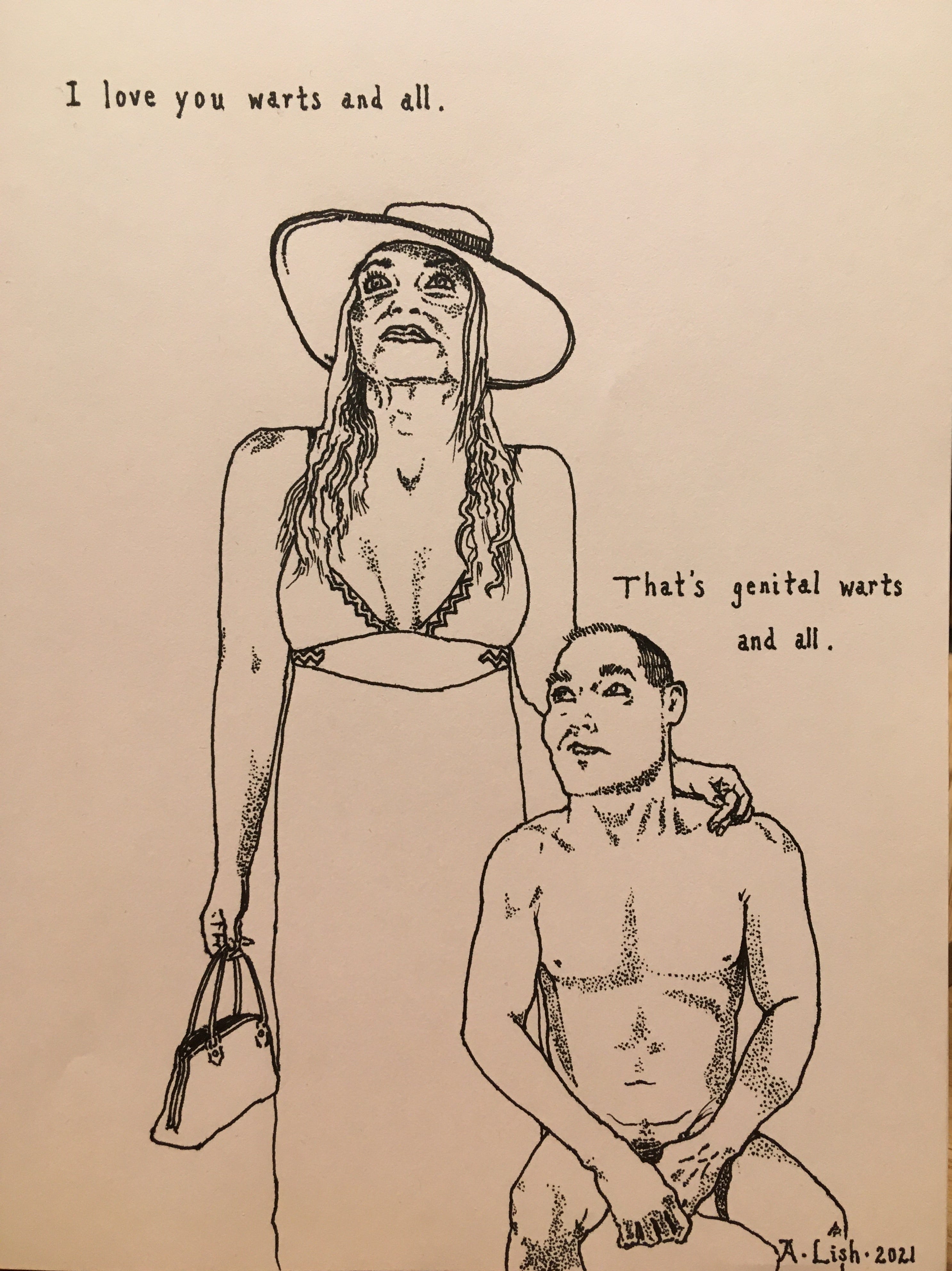
Drawing went on hold during the all-consuming effort of a second novel, when I was trying to prove that the first one hadn’t been a fluke. Seven years later, when I could see light at the end of the tunnel, I started drawing again. The pictures here are from that time (2020-21).
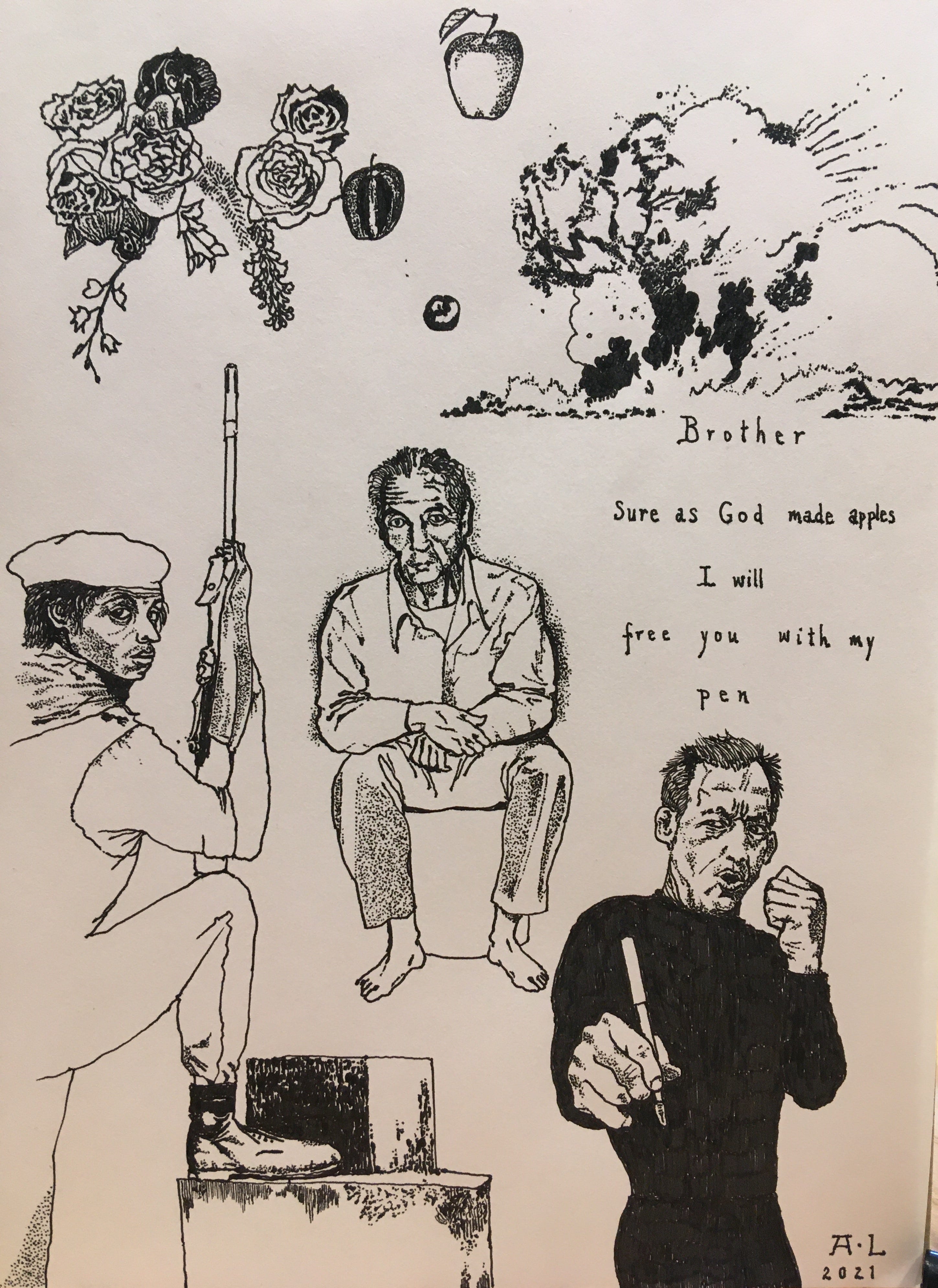
I was trying to solve a different problem: the stereotyped image produced by muscle memory. To break through, I drew from life, sometimes using myself as a model, forcing myself to observe what I actually saw.
Paglia appears because she had been a patron saint of mine for years. Her big-tent view of art, embracing everything from cave painting to rock ‘n’ roll, had helped free my pen from rules my editor-father imposed, which I felt were too narrow.
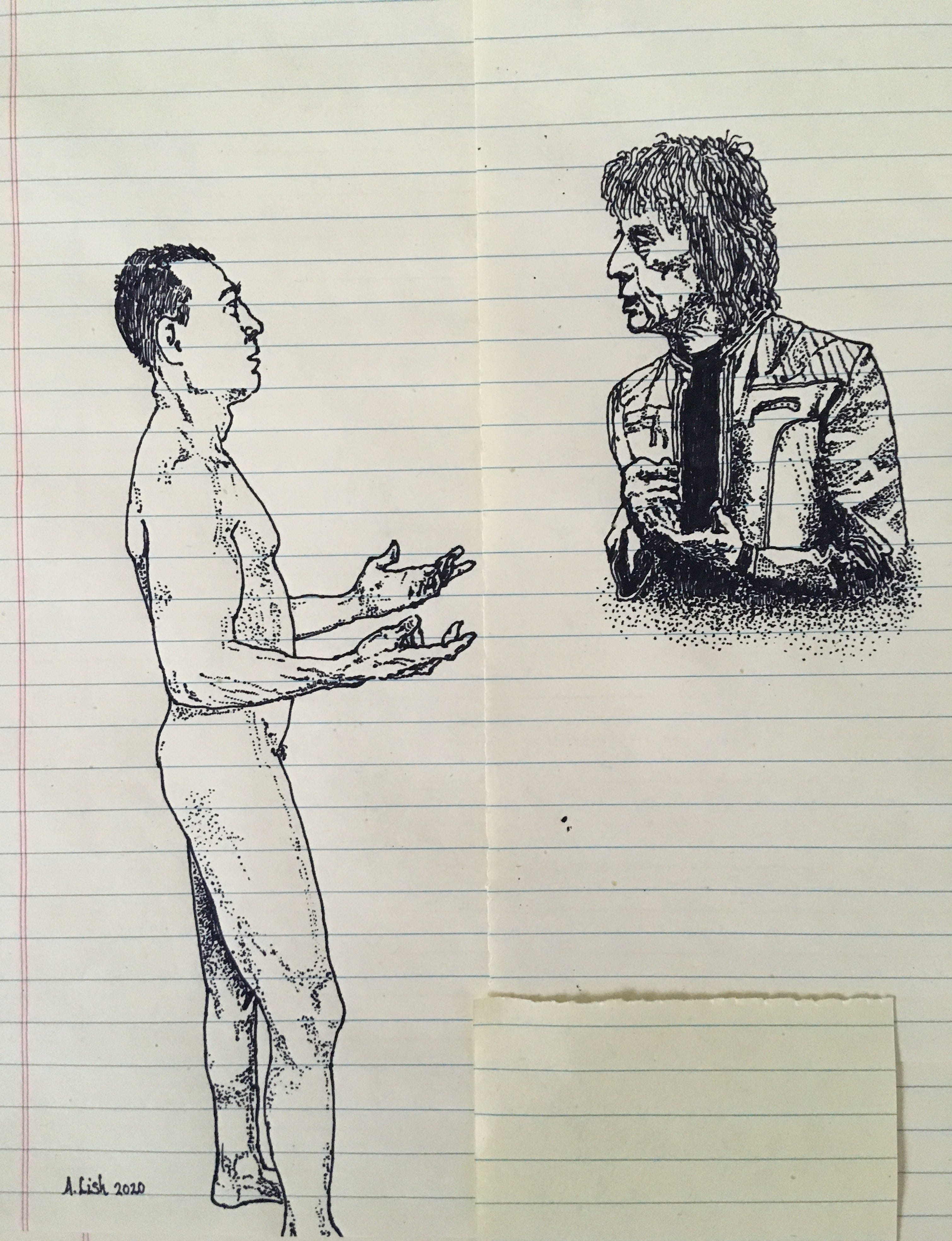
In this picture I seem to be asking her for something — maybe sympathy, wisdom, or her blessing in support of my struggle to complete The War for Gloria.
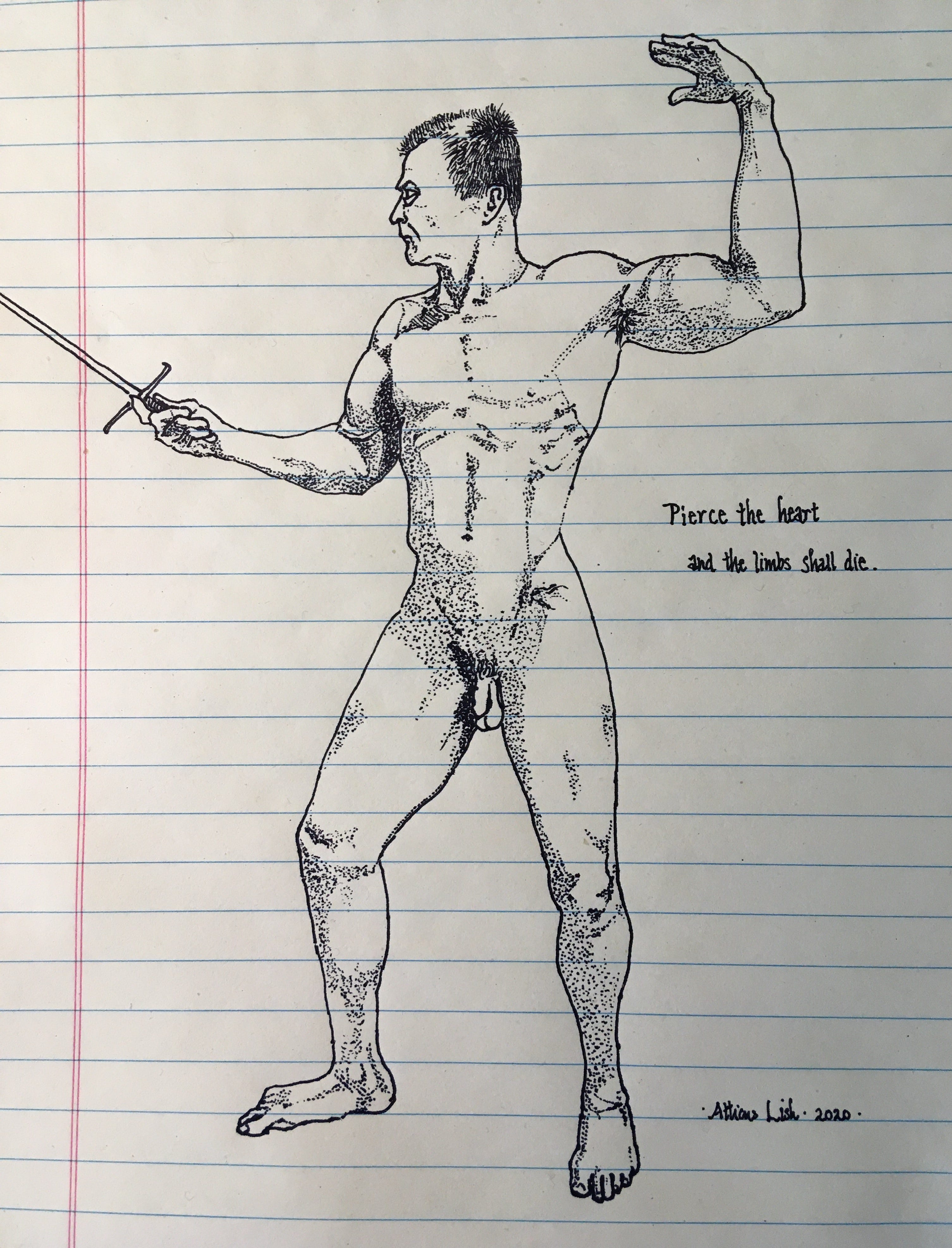
But it is someone other than Paglia, someone who asks not to be named, who has proved to be my most reliable guide. This friend gave me the single best piece of wisdom about writing that I’ve heard from anyone anywhere: it’s a process.
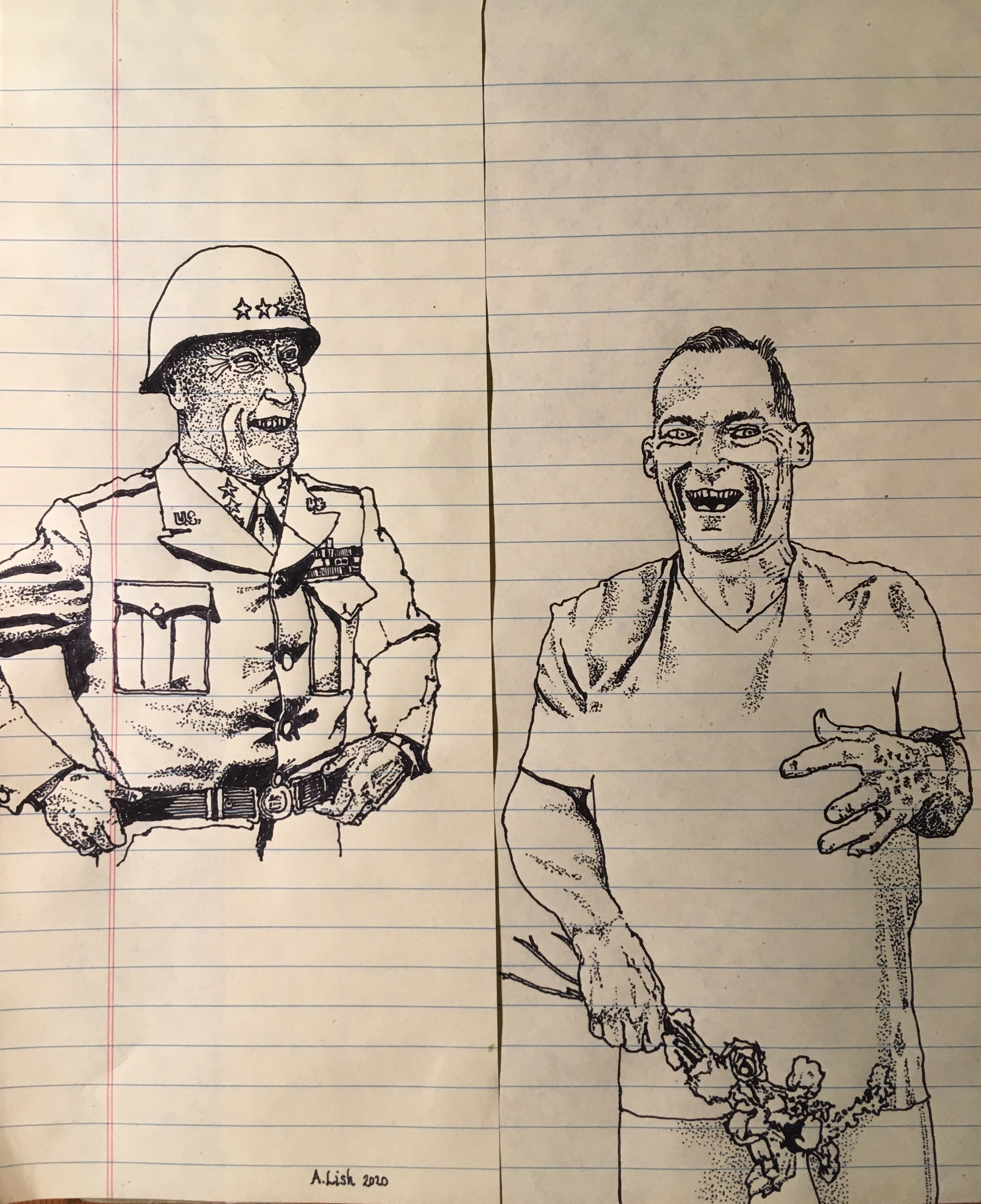
I think this statement applies across the board to all fine, serious art: it is a process of finding what to represent, what should be in the painting or the literary scene, what the drama should consist of. The process takes place through trial and error and involves stirring the deep well of instinct, emotion, imagination, and dream, which has its own cyclical timetable. The artist sails on the sea of the subconscious until images come up from nature itself.
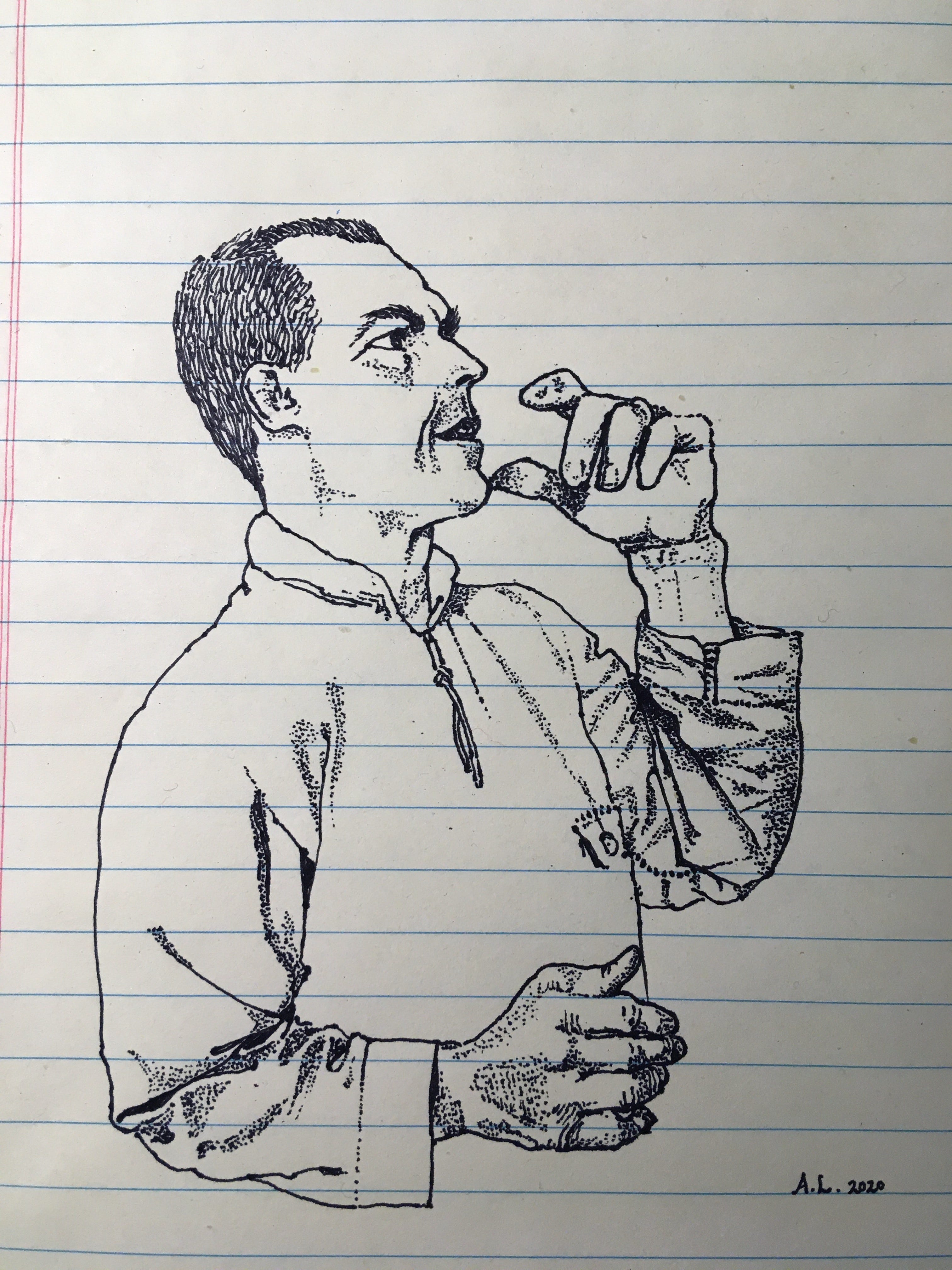
While I have devoted myself to writing novels for the past eighteen years and will continue, I consider myself an artist, not a writer. My favorite art form is the novel.
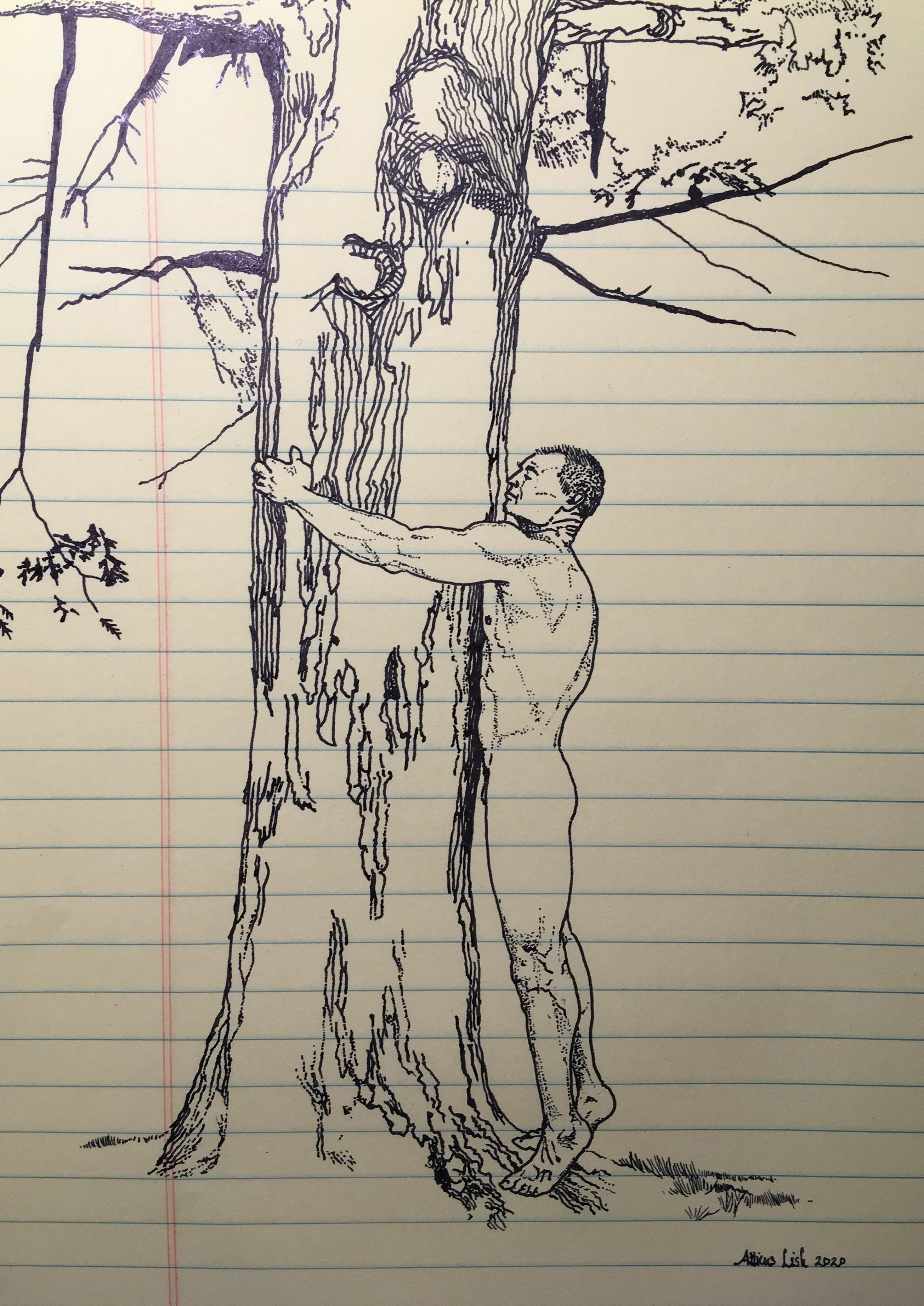
How important are words? How important are pictures? Both are important; I don’t see that either should banish the other. The artist should honor — and stimulate — both eye and ear. But his first task is to conjure people to life and, like a medium channeling spirits, let them speak and act through him. The novel can be sung, chanted, mimed, painted, filmed, animated, printed in braille, carved on the wall of a cave. What matters is the art act, the mirror of human life.
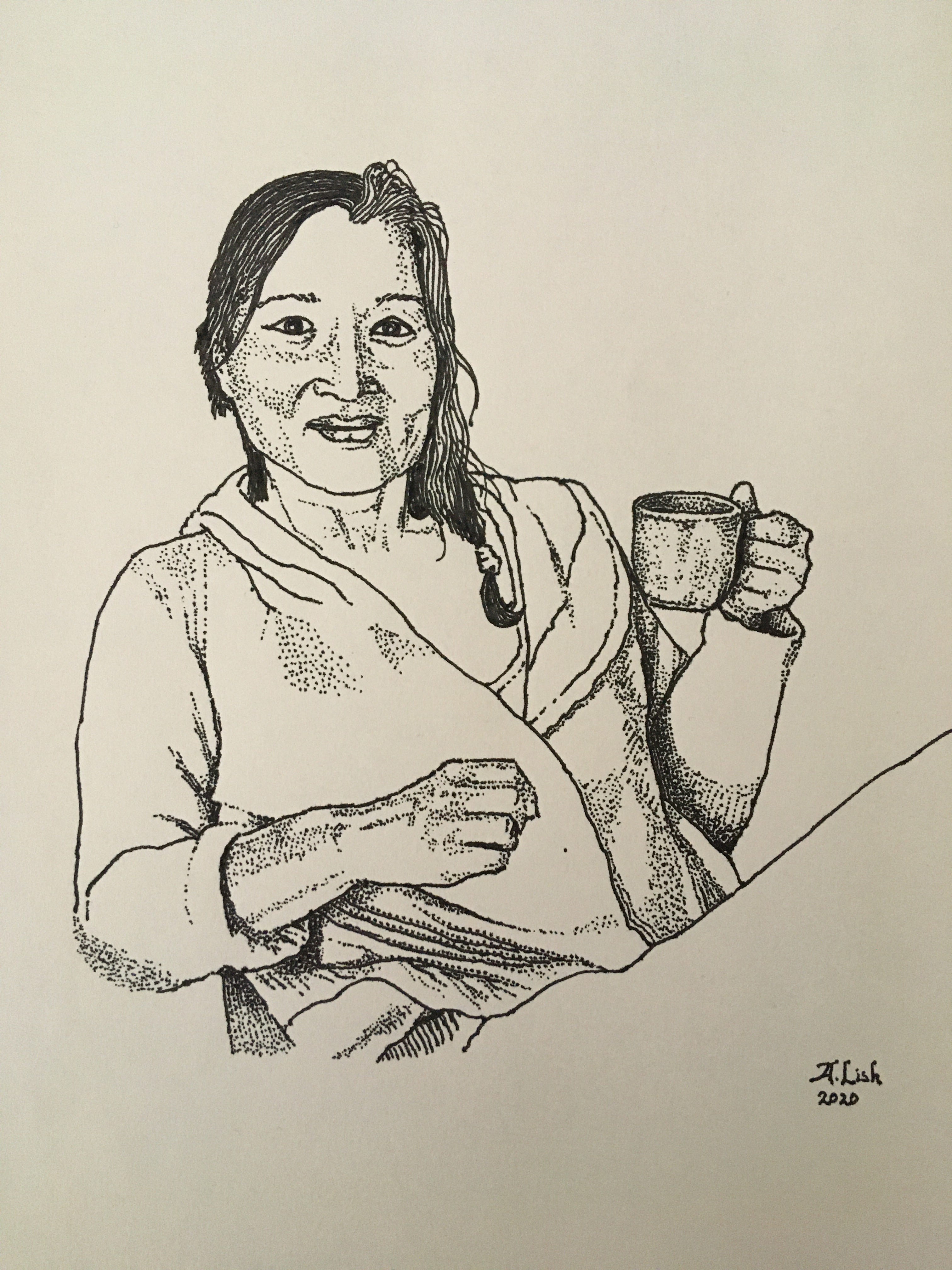

Atticus Lish is the author of two novels, PREPARATION FOR THE NEXT LIFE (2014) and THE WAR FOR GLORIA (2021), and a book of eccentric cartoons called LIFE IS WITH PEOPLE (2011). He lives in California with his wife Beth of 31 years and he’s working on his third novel.
 | A guest post by
|
I love how you write about the link between these two art forms and your own journey.
And with this, I totally agree:
“But his first task is to conjure people to life and, like a medium channeling spirits, let them speak and act through him.”
Writing means being haunted, being possessed.
This is wonderful!