


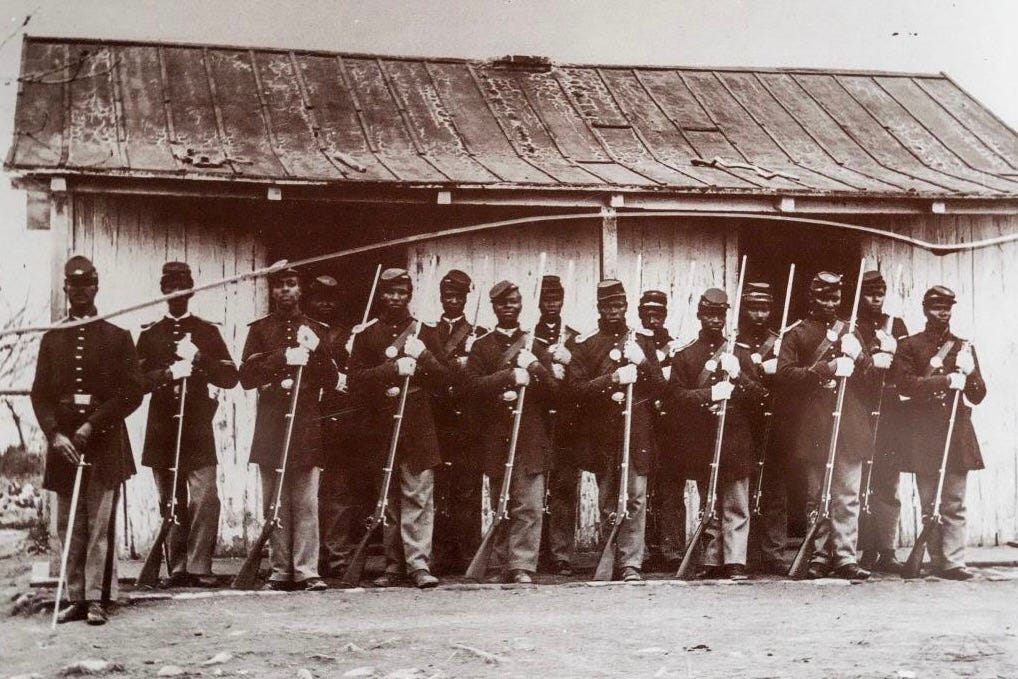
One shouldn’t look to fiction for historical phenomenology, but I’m not sure of another art form better suited to communicating to our contemporary selves what life felt like in the distant past. The philosophical notion of phenomenology was an attempt to understand previous eras on their own terms, instead of imposing our present mores onto them. This would suggest that the best way to get a sense of the past would be to read first-hand accounts from various periods, which might provide a sense of their prevailing zeitgeists. Thus, anyone seeking verisimilitude of the Civil War in America, say, ought to read something like Harriet Beecher Stowe’s Uncle Tom’s Cabin. Yet unlike diaries or journals or reportage, fiction is affected by its contemporaneous culture in much more ambiguous ways — so mysterious, in fact, that accurately extrapolating insights from novels is practically as difficult as extracting insights from the culture as a whole. Diaries and journals are private forms, still obviously influenced by the world around them, but less public-facing than the capitalistic enterprise of selling books. Journalism, always susceptible to corruption and deception, is based on a power dynamic between the privileged and the general population — sometimes it is controlled by the powerful, sometimes it undoes them — so even unreliable nonfiction can provide fascinating context for complex situations. Novels must sell or disappear, meaning their content is, in part, always filtered through a company’s desire for profit. This can lead to compromised texts, which don’t merely follow its hopeful demographic’s societal decorum but actually depict it — effectively taking prescriptive ideas about how people should live and presenting them as if that was how people did live. Jane Austen isn’t going to dramatize the less presentable aspects of early 19th -century English gentry, even though her project was to satirize them.
Max Watman’s Tomorrow, the War is historical fiction, which as a form seems to contradict the very foundation of phenomenology, by viewing the past through a present lens. But as a comparison point to Uncle Tom’s Cabin, a work with which Watman’s novel is in conversation, it’s fascinating to note the differences. For example, Tomorrow, the War features many elements that contemporaneous novels of the period left out or de-emphasized, creating a more realistic portrait of life during slavery. There are some savage moments here, showing just how pervasive and inescapable the horrific violence of slavery was for everyone. Yet the novel also contains not one use of the N-word, a choice that reflects modern sensitivities but denies experiential reality. Stowe’s novel teems with the epithet, occurring first on the second page. In this regard, Watman’s novel is certainly a bit easier to digest, as the constant use of racist language — even when historically accurate — can be draining and distracting. At the same time, its absence might create a very different impression of its setting, a kind of whitewashing for the sake of digestibility. Then again, who wants to read a white author throw around disgusting slurs?
The plot of Tomorrow, the War delves right into the various machinations of American slavery. In the 1850s, Bodkin’s Hundred, a neglected plantation in Virginia, falls into the hands of Oliver Bodkin VII, a progressive abolitionist uninterested in running the property. He frees the nine people his family had held in forced servitude, but it turns out that two of them, brother and sister Raleigh and Temple, are his half-siblings, a result of rape by his father’s hand. Oliver decides to raise and educate them as free people, eventually teaming up with Rose Knaupf, a widow using her late husband’s wealth to open a school for girls, which Temple attends. Raleigh, meanwhile, learns piano and discovers he’s got quite the knack.
This tenuously content time comes to an abrupt end when a neighboring slave owner named Zeb Newcombe, angry at Bodkin’s disregard for the ways of the region, burns down the property, killing Oliver. The fire is blamed on Raleigh, who flees, though everyone is told that he was killed. Raleigh believes that Temple was also killed, but she was “saved” by Newcombe, who then buys her despite her status as a free woman. When Raleigh ran, he took their documents with him, as he didn’t think Temple needed them anymore. Temple, then, is forced into slavery again, while Raleigh lands a gig with a traveling troupe of performers.
In a separate narrative, a young man named Jeb Stokes sets out on his own, leaving behind a Jewish family who hadn’t ventured out beyond their homestead in a generation. The place is even named after them: Stokes Mountain. Jeb’s father and aunt were killed in an accident, and it seems likely that his mother and uncle orchestrated it. “There’s got to be a real life down there,” Jeb tells them, referring to Richmond, the city where he initially plans to go. A real life as opposed to the Hamlet-y hamlet of his youth.
At first, he camps just outside the city to slowly acclimate himself to his new environment. He witnesses something extraordinary and traumatic. A group of 20 slaves all chained together by their necks and feet are being forced onto a boat, but they stop before boarding and, as a single unit, they plunge into the water and drown themselves. “They had found a moment of freedom,” the narration reads, “in the space between the shore and the boat, and they had decided to stay there.” Jeb winds up volunteering for the Army and, with a fellow soldier and a Native American named Red Joe, robbing a mining camp and murdering a sheriff. He becomes an outlaw, in other words.
The teacher, Rose, who moved to California before the fire, eventually sees an advertisement for a local show featuring Raleigh, who she also had believed dead. In a risky moment, Temple had written Rose a letter in French telling her that she was enslaved again. Rose then writes a letter to Raleigh with this information (which is delivered in an interesting procedural sequence by a moody Pinkerton). Raleigh then blackmails Jeb into helping him break his sister out of her prison. This rescue mission comprises the novel’s finale.
These numerous threads are weaved by Watman with dexterous aplomb, for the most part, with the exception of an extended period when Jeb disappears from the narrative for too long. In a big tale teeming with characters and set-pieces, balance is paramount, and Jeb, already a taciturn and inarticulate person, loses some of his prominence during his absence. Additionally, Watman doesn’t abide by the convention of maintaining points of view within sections or chapters. There are times where the perspective jumps from one character to another. In the beginning of one chapter, the prose reads: “Father Rice, a well-kept man of solid middle age, only slightly worried about how proud he found himself of himself at times.” Then, the very next paragraph, this: “Marie Newcombe felt she could hear him capitalize the pronouns.” A reader may, in such an instance, believe at first that, since it seems we’re in Father Rice’s POV, this line about Marie is not an accurate description of what she thinks as she listens to his sermons, but rather what Father Rice thinks she thinks. The language of third-person narration tends to reflect the thoughts and opinions of the characters. Choosing which perspectives to illuminate and which to withhold and when is what makes novels work. When there are too many shifts, I lose trust in the novelist to make choices. Watman doesn’t do this so often that it sinks his novel, but these slips in cohesion do allow a little too much water onto the ship.
Tomorrow, the War is, ultimately, a wonderful mix of propulsive plot and historical enlightenment, an old-fashioned yarn with more going on than just the momentum of the story, which nonetheless crackles with energy. Watman has clearly done his research, which he’s used to create a believable and humane portrait of a barbaric time.

Jonathan Russell Clark is the author of three works of nonfiction. His writing has appeared in the New York Times, Esquire, LA Times, and numerous others. He is also the reviews editor for Punk Eek.
 | A guest post by
|