


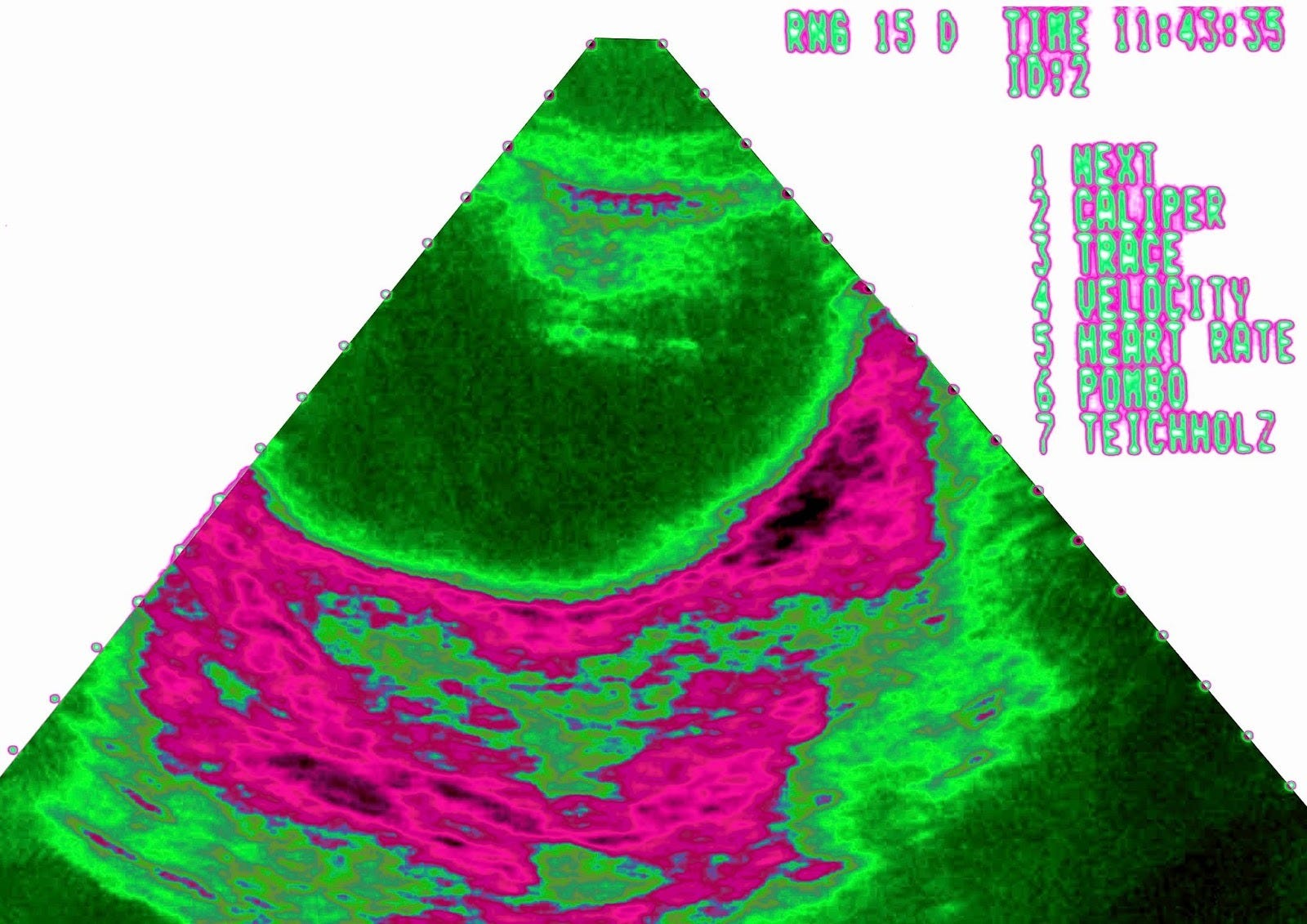
My mother wasn’t able to have children. She’d been diagnosed with a severely “bicornuate” uterus. Its deep top cleft would not permit a fetus’ implantation or habitation. This congenital irregularity has been called both “horned” and “heart-shaped” in the clinical literature, depending, I assume, on the observer’s temperament. My mother, pleasantly surprised at my safe arrival after a brief and almost anonymous tryst on an Italian research trip she’d taken in graduate school, inclined toward the heart. “It’s a symbol of how much I loved you from the beginning,” she would tell me when I was a child. She liked to show me her old ultrasounds on the computer.
She’d gone to Italy to study the Futurists for a chapter in her controversial doctoral dissertation, Art as Power: A Defense. “I finished in 2002, the year after my daughter was born,” she told an interviewer about two decades after that. “It was a good year to make an argument of that kind, and to take it from academe to the private sector. Security was booming in those years.” She added, “Later, of course, you’d get run out of academia for saying what I said. The argument was perfectly obvious, however. What gives it a certain cachet is only that it’s become forbidden. When you make an obvious idea forbidden, you give it an almost erotic glow.” I’m watching that interview now, your grandmother’s straight silver hair radiating against a black backdrop. Soon I’ll watch my other favorite video again, the one where she’s picketed as she tries to give a speech on a college campus, just smiling silently, barely even blinking, as the chants denouncing her as a torturer and murderer get more and more wild until police drag the protesters out. She explained her obvious, forbidden idea in the dissertation’s first chapter, which I quote here (I have the document open as I write you this letter):
Artists and humanists have grown very comfortable over the last half-century with the idea that the aesthetic serves power, makes power appear attractive or legitimate or original, functions the way Marx described religion: as a flower on the chain of oppression. Our comfort, however, is illusory, a tough-minded posture concealing a sentimental evasion. This insight about art has led to an endless inquisition of art, though “inquisition” puts it too strongly. We have actually pled with art instead to do anything else but serve power: if it can’t serve powerlessness — and it can’t, because nothing is less attractive than powerlessness — shouldn’t it at least criticize power, interrogate it, expose its abuses, reveal it as contingent, artificial, alterable? This dissertation dares to ask, however, what might happen if we learn to celebrate art’s augmentation of power. What if those of us who serve art learn to serve what art serves without complaint? What if we drop our tiresome, querulous hypocrisies and fly under the banner of the power that actually employs us? (For the public and private grants that supported the writing of this study, please see the Acknowledgements page.) At the very least, such an inquiry will have the advantage of clarifying values. Whether my own discourse is sincere or Swiftian, I will leave you to judge. Far more important is the decision it leads you to make about your own convictions.
A series of boldly transhistorical and interdisciplinary case studies followed: the role of sculpture from Renaissance Florence to Fascist Milan, the place of poetry in the British Empire, and, most audaciously, the function of popular music and cinema in recent American military engagements. “Is there a greater testament to music’s power to transform the listener than its use in torture?” she asked rhetorically. “What do we love in music if not its torturous power?”
She soon proved she had been sincere and not Swiftian when she parlayed the dissertation’s minor notoriety in academic circles into lucrative consulting work on aesthetics for a variety of conspicuously un-aesthetic industries (defense, biotech, robotics) in need of appealing public profiles. They paid her escalating rates for counter-intuitive insights. She taught these companies not to use rhetoric to justify themselves, especially moralistic rhetoric of the kind the public had long ago learned to dismiss with cynicism. Present yourself instead, she told them, as the unavoidable future, a future attractive for its very simplicity and severity, an implicit summons to self-sacrifice. “People want to sacrifice themselves,” she said. “Hedonism and self-interest makes them suicidally unhappy, addicts them to pills and pornography. They’ve just forgotten any language in which to articulate their longing to submit with the collapse of religious and ideological systems. So we will free them from language entirely.” She replaced a defense company’s rippling red, white, and blue flag logo with three silver three-forked lightning bolts; she re-conceived a biotech firm’s ads, previously full of gurgly infants, with an eerie image of computer code overwriting an embryo; she told the robotics company to stop trying to make their creatures look cute, like dogs or toddlers, but rather to embrace inhumanity, to produce six- or eight-armed servants, all the more effective for their many appendages, plastic-and-steel arthropods to skitter underfoot as they do your business for you. “Better to impress than to endear,” she said.
Meanwhile, she bought me a kitten and sent me for ballet and piano and painting lessons. We were like two best friends strolling the Met arm in arm on the weekends, and the conservatory and the revival theaters. She was excited when I turned 13 because she said, “I have the taste of a 13-year-old girl myself.” She liked Van Gogh, Chopin, Rilke, Bergman, and French vanilla ice cream. “It’s embarrassing, really,” she told me. She asked me to just use her name, no “mom” or “mommy.” We would paint en plein air in the park on Sunday mornings, our worship service. We were cultured, oui, and flew to Paris every other year. Your grandmother was the rarest form of hypocrite: brutal in public, tender in private. The small borough row home in which she raised me at first, and then the rambling city-view penthouse we graduated into as her profile rose and her fees increased, showed no evidence of cold Futurist cruelty. She tended toward the rococo and even the multicultural as an interior decorator, ornate candelabra on mantel and tables, Indian and Mexican tapestries on the wall. She never raised hand or voice to me, never brought a stern man, or any man, into our lives. When I would misbehave, she’d gather me into her arms and try to talk emotional sense: “I understand why you’re frustrated” or “I’d be angry, too, my love.” As a child, I used to take her Apollo and Dionysus bookends, the one upright and imperious, the other couchant and sly, and make them kiss.
When in high school I began to understand her job, began to watch the videos and read the essays denouncing her as “the Albert Speer of neoliberal imperialism,” to quote one perhaps overly excitable polemicist, I accused her of tremendous evil, laid out the crimes in which she was implicit one night over dinner, over the coq au vin, my favorite.
“I understand why you feel that way, darling,” she said, “but what could I do? Adjunct lecturing at $2000 a semester for the rest of my life? I thought I could afford to throw my life away on beautiful things because I always assumed it would just be me. I didn’t know I’d have a baby before I had a Ph.D. Sweetie, I did it for you.”
Unable to sustain this contradiction, I went no-contact with her the year after I got my MFA and started making enough money from teaching, plus a decade of savings, to afford my own apartment. (You might say I made it convenient for myself, but there is no perfectly ethical action in this life, only aspirationally ethical action.) Even after I explained why we could no longer speak, she never railed or accused, never said I was an ingrate or a traitor; she kept sending birthday and Christmas cards. She left me a voicemail to congratulate me when my first poetry collection, The Horned Womb (2025), was published: “Whenever you’re ready, baby, I’ll be here.” One poem in the collection contained these lines:
you said i only have a single name don’t ever call me mommy
you took me to a room in the museum i saw a mask a demon face
it looked like that picture you showed me of where i used to live
heart-shaped you said the doctor said but mommy it’s not a heart at all
I’ll never know if she read them. A month after the book came out, an assassin shot your grandmother twice in the back of the head as she exited her building before dawn to catch an early flight to Dubai. She’d recently been embroiled in a public scandal about her consultation on the design of an extraterritorial prison where American citizens were sent to be tortured. This is the meaning of another poem in my collection:
her vaunting silver architecture
blurs and wavers overhead
in the his eyes as guards
pour water down his gullet
and electrocute his nipples
She was expecting a congressional subpoena any day, my mother, but a young woman rendered a sentence of death in the street; then the assassin turned the gun on herself. When forensic investigators assembled the shell casings in the order the shots had been fired, the three words the assassin had written on them spelled out this message:
Power as Art

I met Greg, your father, a month before my mother was killed. We were at the release party for The Horned Womb in a crowded, humid Brooklyn loft at the stuffy end of summer. I met him again, I should say, not for the first time. I didn’t recognize Greg, even though we’d gone to high school together. In high school, Greg had been pudgy and ruddy and fat-faced, pedantic and know-it-all, an habitué of nerdy message boards, full of tedious historical factoids and reductive explanations of complex phenomena, a science-fiction-reading atheist with equally distasteful friends, a congeries of acne and superfluous criticism. In sophomore English, the only class I remembered taking with Greg, the teacher finally had to ban him from explaining the functional, rational, and historical bases of the myths relayed in The Odyssey. “It’s a distinguished ancient practice,” I remember him lecturing the teacher. “It’s called euhemerism.” I was barely listening; I was writing a poem about Nausicaa in my Notes app:
All I want, handsome sailor,
is a private island I can call my own.
This new Greg, the Greg of the loft and the release party, stood lean and wiry in an attractively rumpled blazer, stubble stippled on the planes of his face, the grip of his calloused handshake just this side of bruising.
“We share a publisher,” he told me. When he saw the ad for my release party on our publisher’s social media feed, he decided on a whim to come, he said.
“I didn’t think you liked poetry.”
“I’ve learned.”
After Greg’s death, the authorities recovered from the cellar a clothbound graph-paper diary he kept in a precise pen script, legible except for the occasional blood-spatter or bullet-hole; it later came into my possession. This is what he wrote, your father, about me on the night we met again:
In high school, I always told my friends I thought Jen was pretentious with her poems in the literary journal and her paintings in the art show and that mother of hers who came to talk to the class on career day about how art was more than just decoration, was in fact the highest form of political and technological power because it convinced people to subject themselves to political and technological power in the first place, her mother in her silver pantsuit and sleek silver bob, who spoke as if her voice were chiseling the edges of each word.“Better to impress than to endear,” she told us, her trademark line. The teacher nervously hurried her out of the room before we could ask any questions. But as desire and disgust are two different faces of the same fascination, I stole looks at Jen all the time in the classes we took together, the ones she doesn’t remember, to judge from our conversation tonight. Her dark hair would veil her face as she tapped her poems onto her phone with one thumb. Her fan of hair just slightly trembled with feeling, like a breeze behind a curtain, the only sign of any inner passion. Her mother must have dressed her in those days: collared shirts and blazers, smooth slacks, penny loafers or mary janes, no skin below the neck, or none other than hands with bitten fingernails, for my desiring eye to adhere to. I was so ugly and annoying and beneath her notice that she didn’t even catch me spying. I thought a lot about Jen in those days, though she didn’t know my name. With my old friends, I made fun of her stupid poems, but one night I dreamed she stood up in class and carried her phone over for me, and not for anybody else, to read. Tonight, she wore a thin sundress to the release party, one strap hanging off her shoulder, no bra. She was blotched and smeared all over with bad tattoos; she wore those trendy split two-toe shoes that made her feet look like cloven hooves. I’m not sure I would have recognized her, to be honest.
I could see your father discreetly studying my tattoos as we made small talk. His eyes wound along the dragon that coils all up my left arm, for example, though I admit, as he confided to his diary, that the scales had begun to leach and pale. I caught his eye traveling over my scumbled shoulder, too, and explained, “It’s the dragon in the sea. From the Bible. My mother hates them, you know?” He said he remembered my mother, your grandmother; he said she was, and I quote, “formidable.” The diary entry cited above continues:
I’ll tell Sloane that, about her rebellion against her notorious mother, the aesthete of power, the interior decorator of prison cells and torture chambers. Jen’s tattoos stand against that. Not all modern degeneracy, this being a favorite word of our little cenacle’s, leads to the same dystopia, the corporation’s sterile autoclave, the state’s techno-dungeon. We need to have more imagination than that! Some of what we call degeneracy is an attempt to break out of the technocrats’ prison. If the degenerates, the tattooed poetesses, produce mere disarray instead of nature’s spontaneous pattern — well, better chaos achieved than order imposed. On her other shoulder I could see a heart with demonic horns. But I didn’t get a chance to ask her what it meant.
“What’s your book about?” I asked him. I asked, to be honest, because that Greg, the ranting red-faced pedant who’d debunked high-school English, was now this Greg, sinewy and vein-strung and gentle in his speech, a cultured and intriguing man who attended poetry release parties, and I wanted to know something about his transformation.
“I don’t want to bore you,” he said.
“I insist.”
He began to explain the book to me, Against the Future. It came out the following month from the nonfiction wing of our shared publisher, a small boutique press based in the city that published experimental poetry and radical philosophy from young authors. He called it “a neo-Romantic manifesto about the need to reground ourselves in natural cycles, to relearn our kinship with the wilderness, before we’re replaced by soulless, heartless machines,” but then he stopped himself. “I don’t mean to rave at you,” he said quietly. The Greg I knew in high school wouldn’t have stopped himself, I reflected, nor did he believe in the soul.
“I remember you as thinking very differently fifteen years ago.”
Before he could explain his change of heart, a friend pulled me away to meet her publicist, who was interested in representing me. At the end of the night, Greg, a little bit drunk, unsteady on his feet, slipped me his number. A month later, a copy of Against the Future would be found, blood-drenched, in the satchel of my mother’s assassin.

The day after the reading, I told Jan about Greg. Jan was my therapist as well as my girlfriend then, about 10 years older than me. She’d found me crumpled up in tears in the back of a café after my latest break-up — “I can’t love somebody who doesn’t think she deserves love, Jen!” etc. — and offered her services. A year into our time together, though, I thought I wanted to end it with her, both as analyst and analysand and as girlfriend and girlfriend. The subject of Greg, I was hoping, might introduce a schism between us.
Jan held our sessions in a small, dark, windowless room in her basement condo, a room full of canted bookshelves and moldy books recovered from street trash, a room lit by a tiny touch-lamp with an orange shade filched from a dumpster, jasmine incense burning. I sat in a chaise longue that belonged on an outdoor porch, and she sat crosslegged at my feet, making notes in her phone or using AI to get hints for her fanciful diagnoses. Sometimes she massaged my hands or feet as I spoke, or made me lie prone on a dirty mandala rug on the hard floorboards to knead “trapped energies” out of my shoulders or back or hips. She’d earned her therapist’s license — she proudly displayed it on the wall — from a School of Metaphysics in Northern California. I would ask her what she learned there, but all she remembered, she said, all she needed to remember, were the hikes around Big Sur and the way the fog would rise and pour in. “It was like the ocean was boiling.” She was always a bit of a poet herself, your other mother.
At first, I’d felt calm and sheltered in Jan’s therapeutic hovel. I’d gone there because I didn’t know what to do after graduate school, didn’t want to teach for the rest of my life, didn’t want to be a barista or waitress, didn’t want to be beholden to my mother for the blood money she offered as my birthright, couldn’t sustain any relationship beyond a year. I kept having panic attacks and almost fainting at the head of the claustrophobic classrooms where I occasionally taught poetry as an adjunct. Whenever I crossed a bridge I thought of jumping. If my mother, who’d convinced me I was special and taught me to love beautiful things, was a monster, then what did that say about me, or about beautiful things? After a year, however, I began to choke on Jan’s close atmosphere, too. Jan, always on the lookout for what she called synchronicities, said the proximity of our names was a sign. “Jan and Jen, Jen and Jan,” she said. “It couldn’t be clearer. It’s karmic. We have business in this life, you and me, something unfinished.” Jan stood less than five feet tall, had a pixie cut, had a pert little nose and sharp little chin, and looked all-around, I thought, like an adorable elf, so I had no problem falling to the mandala in the basement office in the middle of our third session and making love.
“You have a Persephone complex,” Jan diagnosed me eventually.
“Persephone?” I asked. “She was kept prisoner from her mother in hell. I was kept prisoner by my mother in heaven.”
“First, you’re being too literal,” Jan said. She was on her knees, unbuttoning my jeans as I lay in the chaise longue. “The point is your self-identification as captive, passive: a woman to whom things merely happen.” I leaned over and tried to push Jan away, but Jan shoved me back in the chair, muttering something about my root chakra, and resumed her fumbling with my buttons. “Second,” Jan said, “you’re not thinking about the story as a story. Persephone did live with her mother aboveground before Hades supposedly dragged her kicking and screaming to hell. Do you think she was happy aboveground with her mother? Do you think she thought it was heaven? Why do you think she went with him?”
“You’re blaming the victim,” I weakly objected as I leaned back and stopped resisting Jan’s advance.
“Of course I am,” Jan said. “If victims didn’t allow things to happen to them, would they even be victims? It’s a self-electing role, and a highly empowering one. Everyone would much rather be the victim than the persecutor. Less responsibility that way. What are you even doing in therapy if you don’t want to stop being a victim?”
That session was typical, so I was surprised at Jan’s reaction to my later news about Greg’s re-appearance in my life. I thought Jan would be jealous, would warn me away from this apparently transformed man, this Hades who’d accosted me in a loft.
“Look him up, call him,” Jan said. “Do it today. Go on a date with him this weekend if he doesn’t have a wife or a girlfriend, or even if he does.”
“Really? I thought you’d say it was evidence of my hopeless case. Persephone strikes again.”
“You’ve already memorized what I told you. Now you have to live it. I’m not one of those therapists who’s trying to get you to the point of, ‘Oh, now I know what I’m doing, I can just stop.’ Knowing without doing isn’t knowledge. And you can’t just stop. You have to play the whole drama out consciously once if you want to learn your lesson. I did my best for you. It was our business in this life, but it’s time for you to cast somebody else in the part. Now it’s time to really get your ass in trouble, girl.”
She opened the door to her office and led me through the piles of books and clothes on her living room floor, acrid incense thickening the air. She kissed me so hard our front teeth hit, and then she sent me on my way.

I hesitated for half a second when Greg pulled up in front of my place in a dirty green van. It was a cold Sunday morning in September; he’d invited me to church when I called him, told me he’d recently converted. I told him I was unsuccessfully in therapy and willing to try an upgrade from psychology to religion if only for the sake of my mental health. I was shivering in my nicest dress that morning when he arrived, bumping the front wheel on the curb. He motioned me in by tossing his head. I was, to be honest, looking forward to stained glass, to spires and arches, to organ peals and soaring hymns, to solemn Bible verses and passionate sermons: all those things I’d read about at the university in old novels. My mother had raised me without religion, without saying a word, in fact, about religion. Greg, by contrast, had been raised, as he often told us back in high school, by tepid universalists who believed in an ethical God, their very lukewarmness the inspiration for his raving, red-faced atheist phase in adolescence, though he once conceded that he might with equal justice have gone to the other extreme of fanatical faith. Whatever his adolescent beliefs, he didn’t take me to church that morning. In that green van smelling on the inside of sour milk, he drove me 50 miles out of the city to a white clapboard farmhouse on two wild acres. He brought me inside and introduced me to his friends. This was a church, he explained when I reminded him of where he’d promised to take me.
He and his friends practiced an austere faith. They sometimes called it The Church of Earth among themselves. (“As Nietzsche enjoined us in Zarathustra, we must remain faithful to the earth,” your father wrote in Against the Future.) While they’d found one another in the same social media circles and group chats online where they gathered to share their ideas, they loathed the whole of the contemporary world. They called themselves a “church” only in irony. Some of them even thought the invention of centralized churches, the nuclei of empires from Babylon to Rome to Tenochtitlan, had set humankind on our disastrous course toward technological enslavement. They weren’t united in spiritual belief, then, and most only worshipped what they called the spontaneous order generated by unmolested nature. They believed in building a new social order upon this wilderness: they showed me blueprints and designs of solar-powered cities, garden-topped towers of wood and stone, balsa airbuses cresting the wind on pearlescent butterfly wings.
“I don’t expect to see anything like this,” the artist told me in an almost inaudible monotone. “I draw these to pass the time.”
Her name was Sloane. Tall and gangly, with thin and unwashed blonde hair to her waist, she only wore shapeless sweaters and baggy jeans; she walked everywhere barefoot. Her pale bluish eyes were wide and wet and permanently startled, the pinkish whites the same color as her face. She smiled but never laughed. She drew all the time in a big painter’s sketchbook with oil pastels that left lines of grime under her fingernails, her hands and feet filthy as a child’s, though she was about my age. I wondered how the huge plastic-framed glasses that covered half her face would ever be manufactured in her church’s imagined future.
Sloane was there on our first date, your father’s and mine, along with the three other members of what he called their cenacle, though not ones I ever got to know well. One was a retired professor, a grizzled fat man about 65 who wore a sleeveless shirt and cut-off shorts and grass-stained sneakers with the heels trodden down in all weathers; one a defrocked minister of 40 still dressed as if for a round of christenings and funerals in a Polo shirt and pressed slacks; and the third a former pornographic actress, now in her 50s, who alone in the group favored the blousy dresses of a stereotypical cult. Sloane was the one who cooked that night, I believe, a root vegetable stew, boiled in homemade honey wine. They’d only bought the house and land the month before; they planned to start their own farm soon, but were buying everything in cash from small farmers in the vicinity.
They explained their views to me, or rather at me. The retired professor, the porn actress in his lap, flush with the wine they drank as well as cooked with, pounded the table and said technology had to be taken back to the wheel, the last safe invention. I began to wonder why Greg had brought me there, considering my lineage. He’d simply introduced me as a poet.
Remembering Jan’s admonition to live out the whole story, ordering myself to feel no fear, I said, “This is all very different from the attitude my mother raised me with.” I flashed what I hoped was a provocative smile at your father. Quietly, he told them my mother’s name. Sloane stood up so fast she upset her bowl and sent a flood of hot soup toward me over the rough planks of the wooden table. The professor clenched his fist, and the retired actress put her hands on the table as if she planned to crawl across it and claw my eyes out. The defrocked minister just looked away, as if to avert his eyes from the coming carnage.
“Sit,” Greg said to Sloane. “We’re just talking.”
“She tortures people,” Sloane said in a whisper. “Tortures them.”
“Not personally,” I said. “I mean, not with her bare hands.”
“I care more about her crimes against culture,” said the former actress. The defrocked minister and retired professor agreed. The one to convert and the other to instruct me, these two explained what they thought of my mother. They were devotees of her work, both of her consulting work and the way she defended it in the articles she occasionally published in the media about the need and the good of her business. They agreed with my mother, Greg’s fellow congregants, about the equivalence of art and power, about the need for human subjection to higher ideals. But they intended to overthrow the reign of what she stood for: sleekness as alibi for all those avaricious archons busily emptying the world of everything human, leaving impeccable code where human beings once hewed wood and drew water, and this for the spiritually null rewards of profit and power. They were not the prudes their social-media opponents thought they were, he and his friends, “traditionalists” or “primitivists” as they were called, only advocates for an older wildness, inherently bound by the limits of nature, rather than this technological servitude calling itself liberty. Better the lustful rut in unmowed fields than spill their seed over their screens in air-conditioned cells.
The defrocked minister had made the last remark. Greg held up a silencing hand. “It’s just a more relaxing way of life,” he said to me. “Don’t you think most contemporary ills are caused by the stress of being always available, always on, always having to report to the grid of power?”
No one in The Church of Earth had smartphones, for example, or computers of any kind, he explained. They’d given them up when they came together to buy the house and land. Greg had written his book on a manual typewriter and made the publisher, grumbling all the while, feed it into a scanner. (“That awful industrial noise,” he recalled Sloane complaining of the typewriter.) This was life lived as art, too, he said, no less than anything my mother proposed to the companies remolding the planet: the art of allowing life to unfold itself to you without the mediation of technocrats’ seducing algorithms, the formulae where they imprisoned the atoms of your scattered attention and baited desire. They didn’t even have dumb phones. Greg gestured to the kitchen wall, where an old yellow rotary phone was mounted. That was all they had for communication purposes with the outside world.
It was over that phone that Greg took my call agreeing to our date, and it was over the same phone that I called my mother to scandalize her with the news of where I was, and with whom, and what they thought of her. I told her I was moving out of the city for good to live in a rural retreat far from the deadening artifices of contemporary existence, that I had converted to The Church of Earth. My mother answered the unfamiliar number with a hostile, “Who’s this?” When I announced myself and gave my news, however, my mother only said, with that infinite patience and gentleness she always used on me, “What is ‘not like a heart at all’ supposed to mean, baby?” I threw the phone as if it had burned the side of my head; Sloane gently picked it up and set the receiver down.
The night I arrived they took my phone and hit it with a hammer until it was a mess of glass; then they took it outside and buried it. Sloane taught me, mostly without words, mostly with her childish little grunts and squeals, and the occasional monotone instruction, to make soups and stews. I thought of getting in touch with Jan, but she’d just tell me to let the myth play out, let it play all the way out. I wore your father’s cast-off shirts like dresses, blowing all around me, as I walked out on the misty mornings and pressed my bare feet into autumn loam.
A few weeks after that, Sloane went to the city and shot my mother dead. She left us a note that morning:
Life is torture. Death is mercy.

But before that, the morning after our first date, after a breakfast of raw milk thick as cream, Greg, your father, showed me The Church of Earth’s arsenal: an earth cellar they were filling up with weapons against the inevitable day when the powers that be declared humanity obsolete. They doubted their mundane guns could repel the drone swarms and intelligent munitions they knew would come across the sky, but they planned to enjoy the dignity of dying in a fight. I picked up some kind of machine gun, but Greg said, “Let’s start smaller.” He took me to the woods bordering the farm to let me fire off some revolver rounds.
“Do you have pictures of my mother nailed to all the trees for target practice?” I asked.
“We wouldn’t do something like that.” He gestured to the arching branches with a sweep of his hand. “Forget the farmhouse. This is our real church.”
I’d never even held a gun, let alone fired one. For my second poetry collection, Daughter of Dirt (2027), which one perhaps overly enthusiastic reviewer called “the work of a female Dante writing as if hell, purgatory, and paradise were one and the same,” I composed the following tercets:
The first time she fired
the recoil threw her back
against his chest.
The second time she
got her thumb caught
under the hammer.
He sucked on the tip
of her thumb as the blood
blister rose under
the horny nail.
They made their bed
of leaves and smoke
on the vinous mulch,
gunfire still stinging
in their ears.
We were watching the stars come out through the treetops — it was almost autumn; a few leaves spiraled above us — when I asked your father, “So how did you end up out here?”
“It was Sloane. I met her in my second year of college. Before Sloane, I was exactly the person you remember: smug, self-satisfied, ‘only what we can see is real.’ I had a class with her, though, and she was so quiet. She said things every once in a while, when the professors called on her, but it was never what she said, I don’t even remember what she said. It was her presence. I can’t describe it. You’ve seen her, the look in her eye, like she saw something once and is still looking at it, even though it’s gone. The way she dresses, like she found some clothes on the street and absent-mindedly put some of them on. Like she’s not from here.”
I felt slightly jilted at this tribute to a woman I hadn’t even known to be a rival for your father and probably made some obscene remark. I was very immature in those years, almost 25 years old and still a child.
“You don’t understand. We never had a relationship. We’ve never had sex. I’m not sure she’s ever been with anyone. I’m not even sure she can, not even sure she knows. But I suppose you could say I devoted myself to her, gave myself to her. She’s like my sister, my mother, my teacher, my guru. I’ve followed her everywhere. What else was there in my life? Science? Reason? After a while, what do those mean? I made her favorite books my course of study. I was going to major in computer science but switched to English and philosophy because she gave me a collection of Romantic poetry for my birthday after we became friends. I went to graduate school to specialize in the curriculum that was Sloane. She taught me by example that there was a mystery deep in things, a strangeness you’d never put into words, let alone code. Nothing was stranger than she was. She was getting farther and farther away from everything, though. It only made me come closer. She always told me she was dying. She told me that in our first conversation. I said, ‘You can’t die, I’ve just met you.’ I kept saying that for years, kept feeling like I’d only just met her. From the minute I saw Sloane, it’s like she’s been drifting away, and I’m just clinging on to her legs, trying to hold her down here.”
“What’s wrong with her?” I asked. He glared at me in the twilight.
“She had leukemia as a child. For years. Years of chemo, operations, nights in the hospital staring into the dark. She showed me pictures, her eyes so sunken you could barely see them, almost all white and bloodshot, her bald head splotched all over with veins and bruises like some kind of map on her skull. She said she prayed every night to die. ‘They were holding me prisoner,’ she told me. She felt she was being kept inside a machine even as some other world was begging her to cross over. She cried when they told her it was going into remission. She said they told her — doctors, therapists, teachers, her parents — that when her body felt better, her mind would, too. But no. She’d seen something, and she couldn’t take her eyes off it. ‘I don’t belong here,’ she told me. ‘This is not my home.’ She never came all the way back. In our last year of college, she tried to kill herself. I had to break down the door of her apartment. I couldn’t even see her face under the water, it was so thick with blood. But I pulled her up, got her out, brought her back, breathed life into her on the bathroom floor. She’s never forgiven me. She looked at me like I’d taken her out of the arms of God, which, I guess, I had. But here we are. I go where she goes. She said the earth isn’t her home either, but better the earth than the machine. The earth is closer to the other place, whatever it is, wherever it is. She told me she wanted me to find love, though, real love, a love she could never give me. So I saw the ad for your release party and decided to go. Anything to keep her around; I do what she tells me. But honestly, I planned on kidnapping you or something. Tie you up and ask your mother for ransom, deplete her evil funds. I thought that would impress Sloane more than if I took you on a date. But then I saw you. And then you agreed to come on a date anyway. So here we are, Jen. Here we are.”
It was dark, almost black: cloudy night, new moon. Crickets went at their maddening shrill, a sound I’ve never found any less disturbing than the artificial noises of the city. After a decent interval, to respect the solemnity of what he’d told me, I said, “You have an Orpheus complex.”
“Orpheus? Remind me who he was. I could never keep the myths straight. His wife went to hell, so he created winter?”
“No, you’re mixing up the stories. Persephone is the winter one. It’s meant to explain why there are seasons. What was the word you used to say in high school to explain the rational basis of myths?”
“Euhemerism.”
“Yes, euhemerism. Orpheus was a great singer and poet. He married Eurydice, but she died on their wedding night. He went down to hell to get her back. His songs so moved Hades that Hades agreed to let her out, on the condition that Orpheus travel ahead of her and not look back. He did, though: he looked back. Then he lost her forever. Later, some women tore him to pieces and ripped off his head.”
“What does that myth explain?”
“I don’t know. Why poets are so miserable. Always longing for something they can’t have, shouldn’t even have laid eyes on in the first place.”
He’d been holding me, but when I said this he let me go and stood up, as if I’d insulted him.
“Myths don’t explain anything,” he said, “and nothing explains myths. This complex and that complex: those are just words, not life. It’s so much better to live for something than not. I want you to be a part of the future we’re planning, maybe even its chronicler. You’re a poet: you should know what I’m talking about. A poem is a use of words to get at the life behind words, isn’t it?”
“I don’t know,” I said. “Is it?”
“It has to be. Or why use words at all? Why not just touch?”
You were conceived that night, my daughters, as if to replace the two women who were only one month away from being blasted free of the earth.

The morning after Sloane assassinated my mother and then killed herself, the drone swarm chitinated over the horizon and filled the sunrise sky till it was black. We ran — your father and I, the professor, the actress, the minister — into the earthen cellar to get our guns. I looked over my shoulder as I headed down the steps and saw the black chittering mass in the pink-orange sky. It re-assembled its collective carapace into the figure of a massive, monstrous spider, a design of the type my mother used to tell defense companies to embrace for its terrorizing potential. Better to impress than to endear.
I thought I heard my mother’s voice cry, “Baby, come back!” from the heart of the arthropod. Jan explained later that I did hear my mother’s voice, that the authorities had created a small language model based on her collected writings, interviews, and recordings so that she could continue her work from beyond the grave. The private defense contractor the state hired to recover me from The Church of Earth loaded the smart-drones with the SLM on the theory that my mother’s voice might win me back.
The smart drones penetrated the earthen cellar like a hail of bullets before we had our hands on a single gun. Trained not to target me, they whizzed and whirred all around my body, not even clipping a strand of hair. “Sweetie, come back!” the whole sky roared. The cellar door came off its hinges; I could see the sunrise through the holes in the defrocked minister’s torso as he stood for a moment in front of me before collapsing into a raddled heap.
In my third collection of poetry, Queen of Spiders (2029), which has been said to “evince a new maturity as the poet finally confronts the unspeakable,” but which also proved controversial because of my collaboration with the SLM based on my mother’s corpus, I wrote:
I held my romantic
in one final embrace
then a red carnation
blossomed out of his face
I woke in the smoky, blood-flooded cellar with my head in Jan’s lap. “They thought you’d want to see someone you knew,” she explained. She kissed my forehead. Everything went dark again.
I woke up again a month later in the hospital. I heard Jan arguing with the doctor. “I’m her therapist, and I’m telling you she can handle it. It’ll bring her all the way back.” Her elfin face filled my blurry vision. “There you are,” she said. “We’ve been waiting for you. You’re pregnant, sweetie. Twins, even. I think we should keep them. I think they’d be good for us.”

I’m finishing this on the night before your fifth birthday. I’ve been writing it for a week instead of the book-length poem I’ve been trying to write lately, The Persephone Complex (under contract, 2032), the poem bottlenecked in my head, too big to get out. (Maybe this is the poem.) Jan has taken you out for 4D-printed ice cream, and I’m alone in my workroom at the top of the house, where I can see far out over the sinuous suburban hills, almost to the top of the city where my mother raised me. We’ve been here for a year; already I can’t imagine living anywhere else. You may not remember, but I hid out with you in Jan’s windowless basement office for the first five years of your lives, too terrified to look at the sky. I heard “Baby, come back” in my dreams and woke up shrieking. Jan patiently excavated my terrors and set me — set us — free. I thought you might like to read the story in my own words when I’m gone, no matter what you hear about it elsewhere. I’m not sure I can ever tell it to you while looking you in the eye, girls. Yes, we live on your grandmother’s considerable inheritance; yes, we feel compromised; no, ethical perfection cannot be attained in this life.
I’ve heard the SLM based on your grandmother still lives somewhere on some corner of the network, even has a cult around it, people who base their lives on “her” instructions, people who take all “her” advice on how to get ahead in this ruthless world, as I never did.
Then there are the Sloanites. They’re still around, though I wonder if they will be when you grow up: those girls with the shaved heads and sunken eyes and random clothes you sometimes see on the sidewalk for a phase in their lives with their willfully hideous and probably infected stick-and-poke Power as Art tattoos, before they get degrees or get jobs or even get married. They don’t go online except every so often to release those rogue programs that sometimes actually work to destroy intelligent systems and cause a blackout or outage for an hour or two. Maybe you’ll be Sloanites. We never know what we might be.
Sometimes I used to say to Jan, “Tell me the truth. I died back there, in that cellar, but you put my body back together and put an SLM based on me in my head.”
Do you know what Jan used to say, Jan, my metaphysician, your other mother? She used to say, “And what difference would it make, Jen? What difference would it possibly make? You’re alive. Enjoy your life.”
Anyway, I found your grandmother’s SLM tonight and uploaded this document to solicit “her” comments. “Put it in the form of a poem,” I commanded, as when we worked together on Queen of Spiders, because when I was a child I thought my mother would have been happier if she’d been a poet, just as I wanted to be, would not have put her energy and intelligence into destruction but rather into creation. The SLM must have picked up ambient knowledge about my mother, myself, and adjacent matters, to judge from its output, which doesn’t sound, except for its first line, like anything I ever heard from my mother.
You’re bustling into the house down below now — I imagine your ice-cream breath: French vanilla, your favorite — laughing with Jan because you don’t know anything about earth and death and art and power yet, so I’ll leave you with my love, and with your machine grandmother’s cryptic final message. Your grandmother, after all, trusted artifice to birth the future.
Spiders impress but they never endear
Little girls should stay out of the forest
On the horns of the womb she bore a pest
A child has borne a hole straight through your head
Nothing gratifies like power, my dear
Earth isn’t big enough to hold the dead

John Pistelli is the author of the novel Major Arcana (Belt Publishing 2025) and of the bestselling Substack newsletter Grand Hotel Abyss. He lives in Pittsburgh, PA.

Reminds me of this Overman comic from the 90s
'Earth isn't big enough to hold the dead'
JOHN!
tysm! this was so rewarding to read and so incredibly brilliant, and JUST GOOD
that last line will stick to me forever!