


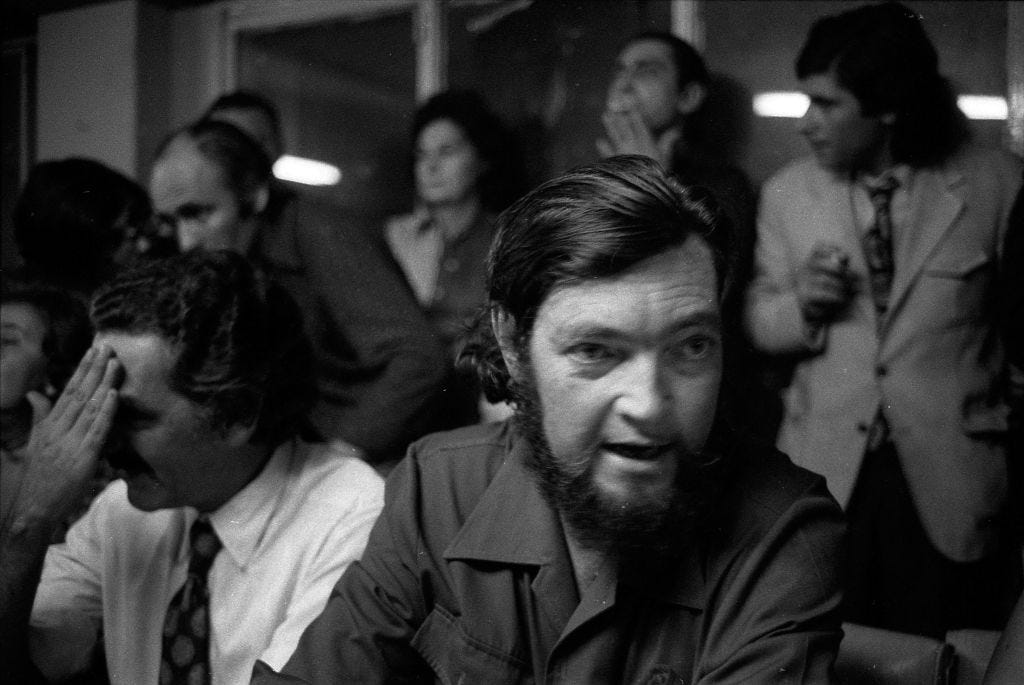
When Peruvian Nobel laureate Mario Vargas Llosa died at 89 in Lima in 2025, many Latin American commentators in mainstream and social media struck a similar note: he was a great writer despite his political views. Vargas Llosa was a forceful and outspoken classical liberal, pro-Western and pro-market. He wanted Latin America to embrace more of the capitalist ideas that had helped Europe and the United States become prosperous societies with powerful cultures, but he also believed deeply in civil liberties, free speech, and the advancement of rights for women and gays.
In 1990, he ran for the Peruvian presidency and lost in a runoff to the populist outsider Alberto Fujimori. Fujimori, who positioned himself to the left of Vargas Llosa, would later apply even more draconian neoliberal policies than his rival had ever promised and, when Congress resisted, he dissolved the body and brought the judiciary under executive control. Armed with these new powers, and while fighting the brutally violent Maoist guerrilla Sendero Luminoso (Shining Path), his government presided over human-rights abuses that, for many Peruvians, amounted to state terror. In the decades since, Peru’s political system has remained deeply unstable, and the authority of the presidency has been eroded by a kind of permanent partisan war in Congress, which has repeatedly impeached presidents from across the political spectrum on shifting, often opportunistic grounds.
That one time, Vargas Llosa — already a famous novelist — ran as what he was: a capitalist on economics and liberal on social issues. He came close to the presidency, but he never ran again.
Instead, he continued his career as a novelist, wrote a marvelous memoir of that experience (A Fish in the Water), took up German, and eventually became an international voice for liberal and democratic values. As Donald Trump rose in U.S. politics, Vargas Llosa expressed deep concern and called him “a clown, a demagogue and a racist” — words he might once have applied to Latin American strongmen like Perón, Getúlio Vargas or Odría, who had helped stall the region’s path toward development, not to a man who, in Vargas Llosa’s view, was supposed to defend Western ideas.
Along with Mexican Octavio Paz and Colombian Gabriel García Márquez, he was one of the Latin American Boom writers who earned the Nobel Prize and, in that sense, the highest possible recognition. All three of them wrote a few great books at the peak of their careers, which, in hindsight, is saying a lot. Their influence on Latin American literature, as with all influences, is mostly bad and in a few cases good.
What Vargas Llosa had, and what many Latin Americans have not always seemed to appreciate, was integrity: he wrote, thought and lived like a free man of the Western hemisphere. García Márquez, who enjoyed the same cosmopolitan life with residences across Europe, supported the Cuban communist regime for decades — one in which, as a young writer, he could neither have written nor published the books that made him wealthy and renowned, and where countless writers were ostracized, persecuted or imprisoned for their ideas or their sexual orientation. When García Márquez died, hardly anyone suggested that, despite his politics, he was a great writer; most tributes simply celebrated him as a great left-wing novelist.
Suzanne Jill Levine probably encountered Vargas Llosa at some point in her life, but he is not one of the subjects of her latest book, Unfaithful: A Translator’s Memoir. As a scholar and stellar champion of Latin American literature in the United States, she certainly met almost all the writers of what would later be called the Latin American Boom, that commercial but literary revolt which, in the 1960s and 1970s, put writers like Jorge Luis Borges, Carlos Fuentes and Pablo Neruda at the forefront of a new avant-garde literature. One of them was the Argentine left-leaning writer Julio Cortázar, who, came to Levine’s Tufts University in 1977, where he filled an auditorium with enthusiastic students and professors.
During that visit he got into a discussion with Jill (as everyone called her, and still does) about Reinaldo Arenas’s life story, a gay Cuban writer who suffered persecution and spent two years in jail before managing to escape to the United States. Cortázar, who lived in Paris and rejected an invitation from Harvard that same year because it sounded too American for him, believed that Arenas’s story was a lie and treated Levine as if she had been brainwashed. Levine writes that by then, in the 70s, “several writers in Europe and the Americas who had originally and fervently supported the Revolution were protesting Castro’s severe Stalinist-style policies—censorship, widespread persecution of homosexuals and of poets and writers summarily branded as gusanos, or worms.”
That might have been true of some intellectuals — Paz and Vargas Llosa most prominently — but in the 1970s Latin America was still under the tragic spell cast by the Cuban Revolution and living through the massive wave of instability it had unleashed in the region. On the one hand, there were left-wing movements that turned to guerrilla warfare because they saw Cuba as proof that one could seize the state and install communism. On the other, there was a right that called on the military to overthrow fragile democratic regimes in order to protect them from what it believed was the advance of the Soviet bloc into the region — and then acquiesced in crushing those movements with methods that, at times, were clearly Stalin-like.
Cortázar, like García Márquez, was not torn by any of these obvious contradictions — or at least he never showed it. Both had settled in cosmopolitan, liberal capitals, Cortázar in Paris and García Márquez in Barcelona, working full-time as independent writers while supporting movements and regimes inspired by practices and ideas radically at odds with the advantages and comforts they enjoyed.
But most of the writers Levine came to know deeply and translated into English — Cabrera Infante and Puig among them — seemed more troubled by that dissonance. I don’t know if they ever fully formulated the discovery — they probably did — that the kind of freedom they longed for was not really being sought by almost anyone back home, neither on the right nor on the left. The world they were finding abroad, whether in New York or London or any other major city, was little more than a dream in their own countries.
In any case, whether they realized it or not, they made literature out of those stark juxtapositions, as writers do. They wrote their best books out of that longing, that sense of loss, of exile and anxious distance.
Levine’s book, in that sense, is profoundly political, but in a very subtle way. As an American scholar, one assumes, she knows perfectly well what it means to condemn left-wing dictatorships in Latin America. Yet she does so in this book, and she did so back then. She condemns right-wing dictatorships too, of course. One of the book’s underlying intuitions is that her friends and subjects — perhaps less vocally than Vargas Llosa, but very clearly in the way they moved and in what they wrote — rejected a certain way of living and longed for countries with intellectual and ordinary freedom.
Was the American way what they were seeking? Maybe no one would have dared to put it that way back then, and probably not even today, but many of them spoke with their feet.
Do literary writers have to be politically coherent? Or, to put it more bluntly, were Cortázar and García Márquez dumb or dishonest men because of their politics? In one of his last books, Philosophy as Cultural Politics, the philosopher Richard Rorty analyzes the case of George Orwell. If he had lived long enough, was Orwell’s anti-communism going to trump his liberal beliefs and turn him, for instance, into a supporter of nasty adventures such as the Vietnam War? Mary McCarthy, Rorty recalls, secretly feared that it would, but Christopher Hitchens assured everyone that Orwell’s anti-colonialism was ironclad.
Taken seriously and pushed to its logical conclusion, however, what Hitchens believed, Rorty argues, meant embracing a silly idea: that a person one finds honest and intelligent will end up holding political positions that future intellectuals will approve of — or, better yet, the positions of the future intellectuals one happens to agree with. That is simply self-deceiving, because moral and political beliefs, like everything else in life, are inherently contingent, random, and very hard to predict.
There is a good chance that, for example, the anti-totalitarian Alexander Solzhenitsyn, who remained a Russian nationalist, would have agreed with the idea that his “great nation” should include Ukrainian territory. Or consider Joseph Brodsky, another Soviet exile, who believed that there are strong nations and weak nations, in a way that can be read as implying that invasions such as Putin’s are inevitable or, somehow, just. And I, myself a more hawkish Westerner, not entirely unsympathetic to McCarthy and Hitchens, find myself imagining another posthumous Orwell — a liberal who might not have thought the Vietnam War was entirely justified, but who would have believed that the Cold War was real and needed to be fought.
Rorty’s relativism has a Nietzschean emphasis. He believes there is no such thing as a clear, coherent way of being a human being — least of all a coherent way of being a liberal-democratic human being in the 20th century. We are full of contradictions, not only between one another but within ourselves. This is, of course, a longer discussion, but for the purposes of what follows I will simply read Rorty as saying something like this: because everything depends on a tangle of historical and personal factors, especially when we are dealing with artists, we have to be minimalist and tolerant in our political disagreements and not treat them as signs of moral failure or a lack of genuine intelligence.
In that sense, was I unfair to Cortázar and García Márquez at the start of this piece? Maybe a little. But I was not judging positions I imagined they would have taken in some hypothetical future; those were the positions they actually held and the lives they actually lived. I am free to have an opinion about them. Right?
I do think there is something valuable in Vargas Llosa’s coherence, but it is also true that I am too deeply invested in the history of Latin America, its intellectuals and writers, and its political tragedies. So when unfairness comes my way — as with the eulogies for Vargas Llosa or with so many opinions Latin Americans have about Borges, a staunch conservative, for that matter — I feel my blood boiling.
Let’s consider Borges for a moment, who was to me the best writer of them all: he did not think like Vargas Llosa, or like me, and it is very doubtful that he really believed in democracy or in broad civil liberties. So why do I keep defending him? Because I think he is a great writer. So there goes my coherence.
When dealing with political disagreements, Levine and most of the men in her life — whose politics carried far higher stakes than mine — were smarter than I am. Cortázar’s episode is the exception that proves the rule. And even then, Levine treats him with benevolence and compassion — traits of hers that I will dwell on in a moment — and presents him as the slightly odd, guileless figure everyone in those circles knew him to be. Otherwise, these intellectuals and writers from a region in turmoil met in exile, sometimes argued bitterly, but for the most part remained friends: they worked together and supported one another’s writing.
The best example of that is the central figure in Levine’s professional life, the Uruguayan critic, translator and scholar Emir Rodríguez Monegal, a generous and brilliant promoter of Latin American writers in the English-speaking world. She met him in her early twenties, as a graduate student at Columbia University, just back from a trip to Colombia where she had bought a copy of the newly published Cien años de soledad. Monegal, recently appointed to Yale, was starting to chair a bibliographic program at the Center for Inter-American Relations in New York City together with two American scholars and needed junior hands. Levine, recommended by one of her professors, the Pulitzer Prize–winning translator Gregory Rabassa, quickly realized that the other two co-chairs were more interested in the boozy lunches at the Chinese restaurant on 68th Street and Third Avenue than in doing the real work. The Uruguayan, by contrast, was sharp and focused on his mission. Young Levine, who was in fact looking for a mission of her own, felt instantly drawn to him.
Early in his life, Monegal had discovered his vocation by reading El Hogar (“Home”), a women’s magazine on his mother’s table that, from 1936 to 1940, featured a weekly page called “Foreign Books and Authors” in which an obscure Argentine writer named Jorge Luis Borges selected and reviewed books published in English, French, Spanish and German — from Thomas Mann to Edgar Lee Masters, by way of the anthropologist James Frazer or the authors of L’Encyclopédie française. Monegal would become, years later, a critic closely associated with the Latin American Boom who published the first biography of Borges in English.
In the late 60s, Levine was an attractive young woman from New York, her presence shining through in the photographs included in the book, where she appears with a glowing smile. Emir, as she calls him in the memoir, was 25 years her senior, a rather large and formal man who was always in a suit and looked more European than Latin American, as many Latin Americans do. After exchanging a few glances and words about García Márquez’s revolutionary novel — to which Monegal was among the first to devote long essays — near the Xerox machine, they arranged to have lunch.
That day, instead of waiting for him in the hotel lobby, she asked to go up to his room. Levine doesn’t quite know why she did that, but Monegal was clearly surprised to find her there. She sat down to wait for him to finish putting on his coat, and after some awkward conversation the older man suddenly knelt beside her and said softly: “You have the most beautiful skin.”
Levine adds:
Sitting apprehensively in the ample armchair facing the door I had entered, I recall that, at that moment, I was feeling an impulse to spring out of the room. His dark friendly eyes were smiling and looking into my eyes. The attraction I also felt seemed so incongruous: a forbidden older man, imposing, with dark prominent eyebrows, a long Spanish face, and his straight black hair slicked back.
They managed to pull themselves together and go out to dinner. Again, when he walked her home she, almost unconsciously, invited the big Latino man upstairs. At her place, Monegal sat down and asked her to sit on his lap. She accepted. And then one of the most beautiful scenes in the book takes place. Sitting on his lap, embraced by him, she says in Spanish: “You know, I’m not that naive,” or “Yo no soy tan naive,” using the pronoun yo for unnecessary emphasis. As she notes, in Spanish the subject pronoun is normally omitted except for clarification, so for her use of it, in such an intimate moment, gave her away as a gringa.
They didn’t have sex that day, but they began a relationship that would shape her future. They would live together for years. She would feel uncomfortable, countless times, about the age difference, yet she would love him and later acknowledge that it was through him that she met the Latin American writers who launched her career.
That “Yo no soy tan naive” is, in a way, the key to this memoir: the story of a talented and pretty woman, full of innocence but also of ingenuity. Someone who can recount indiscretions with kindness and compassion — something that often seems missing in a lot of contemporary writing about men. Levine is a kind woman who treats every man who crosses her path with generosity. There is something so refreshing and intimate about that. I know, of course, that not all men reciprocate in kind, but seeing “el señor” Rodríguez Monegal literally falling to his knees in front of this Yankee girl, and seeing this attractive young woman treat him gently, feels like a scene from another world — one that literature should reclaim for itself.
Levine went on to translate over 40 volumes of Latin American fiction in her prolific and notable career. She also won the 2024 PEN/Ralph Manheim Award for lifetime achievement in translation. Later in her life she co-edited and co-translated a five-volume paperback series of Borges’s poetry and non-fiction for Penguin Classics, and her translation of Guadalupe Nettel’s Bezoar and Other Unsettling Stories was shortlisted in 2021 for the Oxford-Weidenfeld Prize.
But that would come later. Unfaithful lingers in the seventies, the decade in which Levine begins her career already taking on demanding jobs. As her relationship with Monegal develops, she offers some sharp observations on how a partnership between a woman in her twenties and a man in his fifties actually works. She is very candid about the fact that Monegal was not only an inspiration and a mentor, but also an opportunity to live a life of travel, meeting not just Latin American but also European writers, scholars and artists. The network that this respected Uruguayan critic builds around the globe gives us a picture of what international literature looked like at the time — or perhaps of how it was being created by that very “American connection” of people like them. It was the Portuguese novelist José Saramago who said that writers create local literature and translators create international literature.
Alongside Monegal, three other men were the most important figures Levine met in those early years of her career — Guillermo Cabrera Infante, Manuel Puig and Adolfo Bioy Casares — and together they occupy most of the book. In 1969, she and Monegal visited the Cuban exile Cabrera Infante and his wife, Miriam Gómez, in London, where they were welcomed as friends. Cabrera Infante had left his post as cultural attaché in Brussels and fled to Spain in 1965, only to be branded a communist by the Franco dictatorship, even though he had already been cast out of Cuba as a traitor to the communist cause. He finally found a home in England, where he lived until his death in 2005.
By that time Cabrera Infante had published what is still considered his masterpiece Tres tristes tigres, a melancholic yet strongly satiric and modernist recreation of Havana’s cultural and nocturnal life before it was extinguished by socialist moralism. Levine’s first job was this 500-page avant-garde novel, whose origins Cabrera Infante liked to trace back to Lewis Carroll’s Alice books.
They did the translation in close collaboration, or “closelaboration,” a word that the playful Cabrera Infante used in his English. The Cuban was a master of word experiments in both his native and adopted tongues — at one point in the story he gave a lecture in English titled “To Kill a Foreign Name” — and he saw in Levine a compañera in the art of recreating the world through language. The translation was titled Three Trapped Tigers in order to maintain the TTT that Cabrera Infante loved, and it was in many senses a genuine four-handed rewrite of the whole book.
The novel was well received in its English version, but Levine dwells — in rather harsh terms — on the negative review it received from John Updike in the New Yorker. Updike, oddly enough, seemed to be expecting a more traditional or even social-realist tale rather than a bid to produce a Cuban version of Joyce’s Ulysses.
A few years later, Cabrera Infante took another shot at writing a Havana epic in experimental prose in La Habana para un infante difunto — literally “Havana for a Dead Prince/Infant” — a title that from the start played with his own last name and Ravel’s Pavane for a Dead Princess. The novel, a sort of Proustian memoir of Cabrera Infante’s youth in Havana in which the protagonist discovers both sex and his love for literature, has no plot, progression or structure. Its only aim, says Argentine writer César Aira with admiration, is to remember, recover and give concrete shape to those memories. He adds: “It could be seen as the definitive epitome of exile literature.”
This giant book took four years of Levine’s life to translate and came out in 1984 as Infante’s Inferno. After a very fraught and sour back-and-forth with Cabrera Infante, it did not receive the accolades he had expected, in either Spanish or English. That complicated process put the last nail in the coffin of an already declining collaboration between author and translator, but they went on seeing and caring for each other over the years. La Habana para un infante difunto luckily found its readers later among dedicated fans and is now seen as one of the most daring and accomplished works of its period in Latin American literature.
The Subversive Scribe is the book Levine devoted to the peculiarities of translation. Published in 1991, it was praised by Susan Sontag — who makes a brief appearance in Unfaithful as Levine’s friend — as a lively and generous volume, “full of lore and such a vivid account of how complex a process good writing is.” In this latest memoir she achieves something similar with only a few glimpses into her work. The best of these episodes occurs when she is translating the challenging Cuban Spanish of Cabrera Infante.
She recounts that, just after the publication of Three Trapped Tigers, when the author was still encouraging her creativity in rendering his writing into English, she embarked on the collection of miscellaneous pieces Exorcizing a Sty(le). One of these is a long, confusing monologue delivered by a shoeshine boy who may not know his Shakespeare by heart but definitely has plenty of street smarts. He explains, in Cuban slang, the plot of a 1950s film inspired by Julius Caesar. The monologue is written phonetically, as if Cabrera Infante had “recorded” it. Levine, in bringing it into English, imitates the cadence and style of African American speech in New York and brings to life a voice that seems to anticipate the transcultural experiments of writers such as Zadie Smith or Junot Díaz:
Well man the thing is that this guy Ceezer dont wanna be king but he really duz or duznt but he really wants the crown and I dont whats the big deal… when this guy Brutish comes along who aint so Brutish but who’s pretty brutish… Then comes this guy with a beard and a roll of toilet paper in his hand who’s the friend of some fortuneteller who already tol Ceezer what wuz going to happin to ‘im on the Idas or Ideas of March which seems to be a bad month for crazy people and for hares and so on…
I don’t want to wade into the American culture wars — we are all very tired of that — but Levine’s move in this translation, and her mash-up of cultures, really produces a masterly piece of writing that seems to live somewhere between Havana, Harlem, the New Jersey suburbs, the Globe Theatre and Hollywood: a kind of quiet hymn to the marvels of artistic freedom and appropriation.
In the early 70s, as her career took off and her relationship with Monegal faltered, she began cheating on him. Levine describes furtive encounters with young men and women and even a highly cosmopolitan orgy, but the two men who, while expanding her literary world, drew her into deeper sexual and romantic journeys were, again, older Latin Americans—and in this case, both Argentines.
Manuel Puig and Adolfo Bioy Casares could not have been more different as compatriots. The former was a gay man with a poor upbringing who arrived in New York fleeing the oppressive cultural climate that preceded the 1976 military coup. The latter, by contrast, was the son of a wealthy rancher and married to Silvina Ocampo, a prodigious writer in her own right and a member of the Ocampo clan, an even richer and more respected family than the Bioys in Argentina.
Interestingly enough, although Bioy would go on to have a prominent career until his death in the nineties (and even posthumously, when his great book on Borges appeared), by the 70s Puig had emerged as the rising star of the two. He had recently published three celebrated novels strongly inspired by his love of Hollywood. The movie theater was, in fact, his main—and probably only—serious education in General Villegas, the small town in the Buenos Aires countryside where he grew up.
By then he was starting to write his breakthrough novel Kiss of the Spider Woman while living in a borrowed apartment in Manhattan. Levine did not translate that book, because of a contractual issue — Puig turned out to be a tough negotiator — but she rendered into English most of his major works, such as Betrayed by Rita Hayworth and Heartbreak Tango, all in the 70s. After Puig’s death, she wrote a canonical biography of him.
Puig was, in fact, part of that orgy, along with two attractive young Spanish classmates of Levine’s. Until then she and Puig had engaged in the kind of light flirting many women allow themselves with gay men, but after that day a ravenous sexual journey began: Levine found herself in the back of a cab, utterly aroused by anticipation and filled with “masturbatory images” of the imminent encounter. Puig, who lived in New Haven and visited New York once a week, opened the door and, as a first order of business, directed her to the bed. Only afterwards did they turn their attention to editing The Buenos Aires Affair.
The adventure with Puig didn’t last very long — he was gay, after all — and, as she says, “the flip side of [his] adoration was misogyny.” Levine believes that their private entanglement made it easier for Puig to offer her very little for the translation of Kiss, and her own confusion, one infers, led her to turn it down, something she still regrets.
More than a cautionary tale of “never mix business with pleasure,” the episode helps introduce the second focus of Levine’s book: the part that is not strictly literary but is meant to justify the title.
A few years earlier, on a trip to Buenos Aires with Monegal, Levine had met Bioy and his wife at their apartment. Bioy, famously handsome and seductive, struck Levine the instant he entered the room, with his athletic figure even at 50. She doesn’t remember Silvina’s entrance and can say little more about that meeting, except that Bioy — who also, it seems, could not resist the pull of a pretty woman — was far too interested in her.
Before the publication of the great diary of his friendship with Borges, but already after Bioy’s death, another volume of his personal writings appeared. Descanso de caminantes (“A Walker’s Rest”) is a slim selection drawn from more than 17,000 pages of his handwritten diary. It gathers general remarks and reflections on his life, but is mostly forgotten now, probably with some justice: it shows Bioy at his worst. In his private notes, when Borges is not there, Bioy’s quick tendency to the cutting remark veers off in a different direction; it becomes joyless and trivial. Everything that is hilarious and full of wit in the interplay with his genius friend becomes, in solitude, merely cruel and gloomy.
What the book does reveal, in excruciating detail, is the enormous number of romantic partners Bioy had, both during his marriage and outside it. Unfortunately, the stories are not memorable because, as with people in general and women in particular, the solitary Bioy is cold and distant. His lovers pass by one after another and he does little more than record their appearance and disappearance, noting mostly the things about them that annoyed him.
Levine, on the other hand, in Unfaithful tells a beautiful story about him. Their affair is brief. They spent 10 days together in 1973 and a month in 1975 in France. During those mornings, afternoons and evenings, they lived as if they were newlyweds, and Bioy was unfailingly courteous and gallant. Afterwards he wrote her letters that anyone in the world would love to receive: letters in which a lover recalls the feel of your cheek and the smell of your skin, and in which he speaks with complete freedom and confidence about his feelings.
Although Levine makes an effort to cast herself as a dark and complicated person — the “unfaithful” one — the pose doesn’t really fit her. The book loses some of its credibility and force when she insists on that role and comes back to life whenever the serene and lovable Jill returns to the page. And that is particularly striking in contrast with Bioy.
Of course, after the trip Bioy goes back to his life in Buenos Aires and the romance never resumes. But it is not that he fooled her or broke her heart. Levine is not naive when it comes to men. She is simply, almost constitutionally, kind to them. And Bioy, even seen through her loving eyes and despite her attempt to balance the scales, shows in a single afternoon of that dreamlike escape to France what it really means to have a darker side. While they are talking about infidelity and what it means, Bioy, thinking of other men besides himself, says: “one man’s dream is another’s nightmare.”
A few months later, the kind and caring Emir Rodríguez Monegal discovers the letters and is devastated. Levine is no Bioy. She feels guilty and admits she is still unable to talk about those days. Nonetheless, dignity prevails: Monegal is respected and loved for the rest of his life. And even Bioy remains a friend for 20 years, a man whose work she translates in five books into English.
Levine tries to explain the title in these lines:
Fidelity and infidelity can be defined as two sides of the same act of translation, just as many wayward lovers argue: “aren’t I being faithful to myself, to the truth?” Does literary translation, I wonder, open a connection with amorous behavior? Does fidelity or infidelity depend on the reader/lover’s feeling/interpretation?
The questions are sharp, and they do say something about her work, but they don’t quite support the weight they are meant to bear. Throughout these memories, even in her wildest years, one feels that Levine is a strong and decent woman and, quite the opposite of what the title suggests, someone to whom I would gladly entrust my belongings, my book, my precious work — even my newborn son.
“Fidelity” would have been a more accurate title for this book. Not because translation is about that alone, but because fidelity is the main trait Levine displays toward the art itself — the art of bringing words to life and taking them seriously. It is present at every step of her career and in the people around her who truly want to keep literature alive.
The American scholar Valerie Miles, who recently translated Bioy’s Borges into English, said in an interview that the work was unbearable at times, but that she always remembered it was something larger than herself, that some literature is worth every bit of effort. Something similar happens to me at times. I, an unknown Argentine living in a small city in a corner of the world, in an apartment filled with books, often ask myself: What is this obsession, this devotion to people I don’t know who once sent these words out into the world? Who really cares? Am I being naive?
But I am not that naive, as Levine says. There is something big here, something worthy of our fidelity.

Manuel M. Novillo is a writer and academic based in Tucumán, Argentina. A Fulbright alum (NYU, MA in Politics), he has published three books of poetry, is completing his first novel, and runs the Spanish-language Substack Curva de aprendizaje.
 | A guest post by
|
Hola , Buen Ensayo. En Lo Que No Estoy De Acuerdo Es Cuando Citas Estas Palabras: " Ambos se habían instalado en capitales liberales y cosmopolitas, Cortázar en París y García Márquez en Barcelona ". España Estaba En Esos Momentos En Una Dictadura , Que La Editorial Barral Donde Publicaban Estos Autores De La Generación Del Boom Latinoamericanos , Estaba En Barcelona , ( Carlos Barral ) , Pero De Ciudad Cosmopolita Y Liberal No Tenía Nada , Tanto Es Así Que Por Ejemplo Mario Vargas Llosa , Y Marquez Se Fueron Del País Cuando Su Obra Empezó A Ser Conocida En Todo El Mundo. Un Saludo.
That is quite the revisionist take on Vargas Llosa's extremely hard-right turn. The kind of thing a knowledgeable editor would push back on and demand some support for.